|
|
|
|
|
| Why healthy people should care about health problems Some people have such excellent
health during their first few decades that they might assume that
they don't need to be concerned about health issues, but everybody will
suffer very serious health
problems if they don't die young.
Modern humans rarely die young from wolves, starvation, cold weather, or bacterial infections. Instead, most of us will die as a result of deterioration from old age. However, before we die we are likely to suffer from the deterioration, such as from strokes, heart attacks, digestive problems, dental problems, cataracts, pancreatic cancer, kidney stones, arthritis, appendicitis, or Parkinson's. All of us will benefit by improving our health and medical knowledge and procedures, but most people in the world are more concerned about increasing their income, having more sex, becoming famous, or traveling. Even worse, most people are interfering with our health knowledge by promoting the concept that our health information is "private and personal", and by lying to doctors about their drug use and other issues. Everybody should consider their health to be more important than a giant mansion. Our life will be miserable if we are suffering from mental and physical disorders, regardless of how much money, sex, or fame we have. Unfortunately, almost everybody ignores the fact that they will suffer serious medical problems in the future. Animals do not have much of an awareness of the past or the future, or a concern for it. Animals make decisions according to what is happening at the present moment. They do not make plans for the distant future. Humans are more advanced than the animals, but we still have their tendency to ignore the past and future, and be aware only of what we have personally experienced during our life. I've given examples of how this animal attitude is causing trouble for us, such as how we tend to design cities only for the weather conditions that we experienced, rather than the weather that our ancestors experienced. That results in people making stupid remarks whenever there is a unusually significant storm, such as, "Gosh! It hasn't rained this much for 100 years!" Our tendency to ignore the future causes us to assume that we will remain in good health forever. All of us can see our grandparents or other old people suffering, but we avoid the evidence that we will be in that same situation within a few decades. We have only two options in life: 1) we die young, or 2) we deteriorate from old age. Our modern technology is causing more people to experience option #2. Therefore, we would all benefit by suppressing our paranoia of being observed so that scientists can develop a detailed health database. Some people believe that they can live a longer, healthier life by injecting themselves with children's blood, or through some magic chemical or diet, but our genetics determines our lifespan. Therefore, the only way to reduce the problems of old age is to maintain a detailed database of everybody's health, including our ancestors, and restrict reproduction to the people whose ancestors had the healthiest and longest life. This includes passing judgment on how well our ancestors took care of themselves, such as whether they hurt themselves through risky activities, drugs, or improper diets. That will cause each generation to have both a genetically superior body and mind.
|
| I had surgery for a
broken elbow bone After waking up and getting
dressed on 26 February
2026, I walked into the kitchen. I heard water
spraying, and I assumed
there was a leak under the sink. It was slightly dark
because it was
somewhere between 6:30 and 7 AM, so I didn't notice that the kitchen
floor had 1 or 2 mm of water on top of it, and it was getting into the
carpeting of the dining area.
As I walked towards the sink to check out what was leaking, one foot slipped. I landed on my right elbow, which cracked off the tip of the ulna bone, described as a Olecranon fracture. One of the X-rays of my elbow is below. 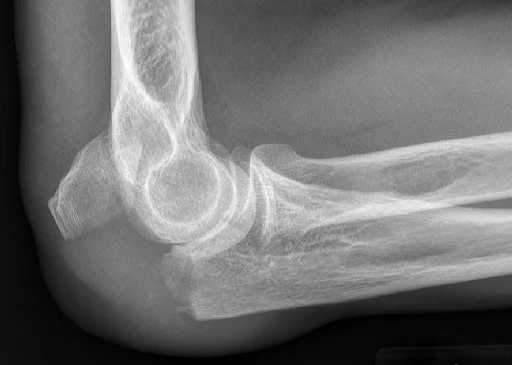 I needed Olecranon Orif surgery
to join the two pieces of bone together. The x-ray below shows the
wires and pins that are now holding the two pieces together.
 My broken elbow brings up a few
issues that I thought were interesting:
1) How does our mind
know where our body parts are?
2) We should collect data about ourselves and our health 3) We should reduce problems, not profit from them 4) Medical expenses in the USA are absurd 5) We benefit from humans, not animals 6) We should be free to analyze our health by ourselves 7) Children should know the truth about our “Golden Years” |
| 1) How does our mind
know where our body parts
are? On the first night after the
surgery, my arm was numb from a nerve block, and my arm was in a sling.
Sleeping was difficult
so I would wake up every hour or two. At about 3AM I began to notice a
slight tingle sensation in my pinky finger, and soon afterwards the
adjacent finger began showing some sensations.
As those two finger began regaining sensations, it felt as if they were sticking together. I was wondering if they really were stuck together from blood, or if my mind was misinterpreting the tingling sensations.
My fingers were not stuck together, but what surprised me was that I touched my wrist rather than my fingers. About an hour or so later, the other two fingers began tingling, and there was a point at which it felt as if they were also sticking together. I once again reached out to see if they were touching each other, and once again I touched near my wrist rather than my fingers. An hour or so later my fingers were less numb, and when I reached to touch them, I touched the lower part of my hands rather than my wrist, so I was more accurate. When the nerve block finally wore off the later that day, I could more accurately touch my fingers when my eyes were closed. This makes me wonder how our mind knows the location of our fingers, feet, knees, and other components. Why did the nerve block in my arm cause me to misinterpret the location of my fingers? If I sit in a chair, close my eyes, and then cross one leg over the other, I can touch my ankle with my finger even though I have not seen where my ankle is. As I move my leg, my mind adjusts a 3D model of my body in my imagination, but how is it doing that when my eyes are closed? How can it so accurately guess at where my leg has moved to? If I had a nerve block in my leg, would I touch farther up on my leg when I try to touch my ankle or toes? The stupid animals, such as grasshoppers, are born knowing where all of their components are, so they can immediately walk and fly without any training or practice. However, the more advanced an animal is, the more time he has to spend practicing how to use his body. The most advanced CNC machines have sensors to determine the location of their moving parts and the length of their tools, but how does a human mind know where in 3D space our fingers are when our eyes are closed, and we are moving our hand around? When we eat, our mind knows the 3D location of our fingers and mouth, and it knows how to move our hand so that we put the food into our mouth, even with our eyes closed. However, when a baby starts to use a spoon, he often misses his mouth and puts the spoon on his cheek, nose, or chin, even though he can see the spoon with his eyes. Babies have to practice putting food into their mouth, and they also have to practice how to walk and pick up items. A person who juggles balls is usually looking at the balls that are in the air, not at his hands, so how does he know where his hand and fingers are? A person who has been born blind, such as José Feliciano, is capable of playing a guitar and other instruments, which is evidence that he also knows where his fingers are, but how does his mind determine that when he has never been able to see his fingers or a musical instrument? How does our mind learn how to become "coordinated"? What exactly is "coordination"? Is our brain merely memorizing a complex pattern of muscle movements? Or is it altering its "hardware" so that we can do things "with hardware rather than software"? Engineers have developed field programmable gate arrays, which allow us to modify computer hardware for specific tasks. The more advanced animal brains seem to have a very similar feature. Specifically, a child's brain seems to have the ability to program itself, and reprogram itself, in order to adapt to its environment, but that ability decreases as we become adults. This would explain why children can easily learn a language, and change their language, but adults have difficulty adapting to new pronunciations, and end up speaking with an "accent". An "accent" could be due to the limitation of an adult brain to rewire itself. How and why do we differ in coordination? If we were to put everybody through a test in which they close their eyes and try to touch some part of their body, we would undoubtedly discover that some people are more accurate at identifying the 3D location of their components. Are the people who can juggle several balls better at controlling their muscles, and/or are they better at identifying the 3D location of their fingers and the balls? As we grow older, do we become less accurate at identifying the location of our body parts? Or is that a talent that we never lose? If a person with an amputated hand were to close his eyes, move his arm to a different location, and then try to touch the area where his finger would be, how accurate would he be? Most of the people with amputated limbs complain that they occasionally feel sensations in it. This is referred to as the "Phantom Limb Syndrome". The amputation removes the ends of the nerves, but perhaps the remaining portions are capable of sending faint signals to the brain, especially when they are stressed through movement or changes in temperatures. If the person's brain does not realize that the hand has been amputated, then perhaps it assumes the faint signals are coming from it. If we were to put everybody through occasional medical tests, and save the data in a publicly accessible database, we might discover that the younger a person is when he has an amputation, the less trouble he has with the phantom limb syndrome, which would be evidence that a child's brain is designed to adapt to its environment, and we lose that feature as we become an adult. Since each of our minds is a unique, haphazard jumble of genes, each of our minds will have a slightly different ability to adapt to our environment, and to reprogram itself when the environment changes. This results in some adults having more difficulty losing their accent. It can also explain why some adults have more trouble adapting to new concepts and new culture, such as adapting to the evidence that humans are apes after they have been raised in an environment in which they were taught that humans are like pieces of clay, or the creation of a supreme being. The adults who have the least ability to adapt to a new environment will be less able to learn something new, which will make them appear more "conservative", stubborn, or stupid. What is "muscle memory"? When we first try to do something that we have never done before, such as walk, type on a keyboard, ride a bicycle, or juggle some balls, we have to put a lot of effort into watching what our body is doing. We are very clumsy. If we continue doing the activity for weeks or months, we soon learn how to do it without thinking about it. We can even do it without looking at what were doing. Many people refer to this as "muscle memory", but what exactly is happening inside of us that allows us to do the activities without paying attention to what we are doing? It seems as if our brain is capable of programming some section of itself to control our muscles. This document claims to explain muscle memory, but it doesn't explain anything. Most people, especially men, are too arrogant to say the words "I don't know". Our childhood might be critical Since our brain seems to have a certain ability to adapt to our environment, and that we lose the ability as we become an adult, this becomes a very important issue for people who are involved with raising and educating children. For example, we might discover that when we raise children with false information and fantasies, such as the Easter Bunny, Jesus, heaven, feminism, and the Holocaust, we might cause their brains to program themselves for a nonsensical view of the world, which might create adults who have as much difficulty adapting to reality as they have adapting to a new language. Likewise, when Khazar children are raised to believe that they are the superior race, and that they are the original Jews, they might become adults who have difficulty with the concept that they are not the original Jews, and that they are actually inferior to most of us, which is why they want to live with goyim rather than their own race. When I was a child, most of the boys spent their leisure time outside with other boys. We would explore the creeks, play games, and ride bicycles. Most of the girls spent their leisure time with other girls. Those type of activities caused us to learn about human relationships, butterflies, creeks, clouds, and other realistic things. As television and comic books became more common, we began spending more time with those things, and talking about them. When I look back at my life, I can see that those things changed some of my attitude and thoughts. I mentioned one example here in which the Beverly Hillbillies television program caused me to want a house with a double, spiral staircase. Today a lot of American children are spending enormous amounts of their childhood with pets, cell phones, television, video games, and other non-human things, including fantasy people from Hollywood movies and fiction books. When children spend a lot of their childhood with non-human creatures or imaginary people, they learn how to interact and form friendships with what are essentially submissive slaves, instead of learning how to interact with humans. That might cause their brains to adapt to abnormal relationships in which they are in the role of a slave owner, thereby causing them to become socially awkward adults. A pet dog, for example, is similar in behavior to a stupid, submissive slave, so when a child's best friend is a dog, he forms a friendship with a creature that he can speak to and treat in almost any manner he pleases, and without repercussions. The child will not become accustomed to listening to what the dog has to say, or discussing issues with the dog. Instead, he will become accustomed to giving orders to the dog and treating the dog as an idiot. Likewise, a child who forms friendships with fictional characters in movies or books, such as Harry Potter, is forming a friendship with himself. Since his imaginary friends will never criticize him in a manner that he dislikes, he can do anything he pleases without disrupting his relationship. For example, he can give himself purple hair and behave like a jerk without his imaginary friends abandoning him, criticizing him, or insulting him. The children who have imaginary friends might become social misfits as adults, and have a tendency to prefer imaginary friendships. They might feel most comfortable with the adults who support their fantasy, which could explain why so many adults enjoy getting together to create an imaginary environment for themselves, such at the cosplay events.  For another example, a child who is pampered "excessively" by his parents, teachers, and other people, might adapt to being pampered, which would result in him becoming an adult who has the attitude of a king or queen, and who has a difficult time dealing with work, responsibility, criticism, failure, and disappointments. Although prehistoric parents pampered their children as much as they could, it was a significantly different type of pampering than what parents are doing today. Prehistoric parents pampered their children in a similar manner as apes. Specifically, prehistoric parents tried to provide their children with plenty of food, and protect them from the weather and predators, but they did not have the time or resources to provide their children with maid services, trust funds, television, candy, and gifts at birthdays and Christmas. Animals have an intense attraction to babies, and that causes us to be titillated when babies giggle and smile, and we also find it amusing when they mispronounce words, stumble, and have trouble feeding themselves. Conversely, we experience emotional trauma when we hear babies cry. Today many parents inadvertently encourage their children to remain helpless and childlike by giggling at the baby talk and stumbling, and helping children feed themselves and get dressed, rather than pressuring their children to grow up. There are also some parents who don't want to train their children to use a toilet, so let their children decide when they want to learn to use it. Even worse, when a child cries over something insignificant, many parents rush over to give him pity and entertain him, which encourages him to cry about trivial annoyances. By comparison, prehistoric parents, especially those who were nomadic, would have put pressure on their children to grow up as fast as possible, and to deal with minor annoyances without crying. Modern children are raised in an extremely unnatural childhood. They are also exposed to lots of contradictory concepts, such as different religions, and different attitudes towards happiness. This is causing a lot of children to become confused about what to believe, and what to do with their life. Even worse, there are lots of adults promoting the attitude that pirates, Bonnie and Clyde, and other criminals were fascinating, wonderful people who had exciting lives. There are also lots of adults promoting the attitude that pranks are amusing activities. Young girls today are exposed to the angry, feminist propaganda that men are sexist creatures who abuse women. What effect does that environment have on a young girl? Does her brain adjust itself to fit that unrealistic, miserable attitude? Will she become an adult who has a difficult time forming a pleasant relationship with a man? Likewise, black Americans are taught that white people have "white privilege", and are abusing black people. Does their brain adapt to that miserable attitude by assuming that they are helpless victims? If so, does that result in them becoming more likely to waste their life on anger, whining, revenge, or pouting? The ability of a child's mind to adapt to his environment ought to make us wonder about the MKUltra program. I do not expect the CIA to be honest about that program, so we have to guess at what it was and what they learned from it. It is possible that they discovered that torturing young children throughout their childhood can cause some of them to become adults who are abnormally violent and anti-social. That would make those adults useful for false flag operations and other crimes. A child who is put through that type of torture might become an adult who has as much trouble overcoming the effects of it as an adult who tries to lose his accent. In other words, that type of childhood might permanently ruin his mind. That would be more cruel than the Chinese parents who permanently ruined their daughters feet by binding them. Many children in the USA are growing up in a social environment that isn't much better than an MKUltra experiment. Specifically, many children are taught to be afraid of strangers, and that they must protect all of their possessions from thieves and vandals. They are also preyed upon by businesses, religions, and other organizations that compete to manipulate their desires and beliefs. They are also exposed to frequent insults and accusations of white supremacy, anti-Semitism, sexism, racism, and white privilege. Millions of American children are growing up in a miserable environment, not the friendly environment that prehistoric children had. What effect does this miserable, frightening environment have on them? I have been shocked repeatedly by the incredible apathy of the majority of people. They don't want to listen to the evidence that we have been lied to about the Holocaust, the 9/11 attack, or the world wars. They don't care that the Artemis and Apollo astronauts could not see stars, Venus, or Mars. They don't care that the government is hiding the Epstein and Anthony Weiner files. Is any of their apathy the result of growing up in an environment in which they are constantly harassed by telemarketers, businesses, charities, religions, political groups, email spam, and political candidates who never deliver what they promise? Does growing up in an abusive environment encourage children to ignore the abuse and focus on entertaining themselves? Does it encourage the attitude that there's nothing we can do to improve the world? Does it discourage people from getting together to investigate and experiment with improvements?  It has been known for a
long time that when a pet dog has been raised in a miserable
environment, such as spending its life alone in
somebody's backyard, and especially when it is beaten repeatedly, the
dog develops anti-social behavior, is afraid of people, and appears to
be very unhappy. It has been known for a
long time that when a pet dog has been raised in a miserable
environment, such as spending its life alone in
somebody's backyard, and especially when it is beaten repeatedly, the
dog develops anti-social behavior, is afraid of people, and appears to
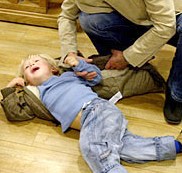
be very unhappy.Many people in the world today behave like the dog in the photo above when we tell them that our leaders are lying about the 9/11 attack, the Holocaust, the Apollo moon landing, and the Epstein files. When I tried to show some people the photos in my book about the World Trade Center towers collapsing, some of them literally pushed the book away. It might be normal for children and women to ignore the problems of society, but is it normal for adult men to run away and hide from such problems? Or is that behavior due to growing up in a miserable, dishonest, and frightening environment? It is also interesting to note that when we experience something unpleasant for extended periods of time, such as a foul odor, our mind seems to have the ability to ignore it, at least to some extent. For example, some hoarders are living in houses that have intensely foul odors, but the hoarders don't notice because their mind has adapted to it. Does our mind have the ability to rewire itself when it is constantly experiencing an unpleasant feeling? If so, can that explain why some people are ignoring the crime and corruption around them? Have they been exposed to so much abuse that their mind rewired itself to ignore the problem? Recently there were some news articles that claim that we will have a longer, healthier life if we get involved with art. An example is this article with the title: "Visiting Museums May Slow Your Biological Aging, Study Finds". The journalists imply that simply visiting a museum or getting involved with some type of art project will lengthen our life. If that is true, I would suspect that it is because we are living in a miserable environment, and getting involved with art provides us with the opportunity to get away from that misery. When we visit a museum we enter an area that is clean, quiet, and relatively free of crime. We can relax. The same is true when we visit a church. While we are in church, we can spend some time in a quiet, attractive area where the people are nicely behaved. When we leave the museum or church, we enter a world that is full of ugly buildings, traffic noise, tire dust, barking dogs, dog poop, ugly streets, homeless people, and badly behaved people. This concept is similar to what I mentioned here in which the environment inside of a typical business is much more pleasant than the environment of our cities.  To rephrase this concept, getting involved with art might improve our life simply because we are living in a miserable environment. Therefore, the most sensible reaction to this issue would be to improve our cities, not tell people to go to a museum. This requires that we make radical changes to our leadership and culture. What effect does phony violence have on children? Every culture believes that children are entertained by the phony violence, blood, injuries, and deaths of movies, cartoons, comic books, and frightening Halloween costumes and displays, and that we are protecting children when we censor real blood, injuries, and deaths, such as by censoring videos and photos of crimes, autopsies, surgeries, recreational accidents, and industrial accidents. Phony violence is considered so beneficial and entertaining that businesses provide haunted houses, and many people arrange a competition in their city to have the most frightening Halloween decorations, and some offer financial prizes. However, raising children on phony violence might result in them having less of a concern for their own safety, and the safety of other people. For example, how many people know the dangers of horses, skateboards, trampolines, and skiing? How many people know how many people have been injured so badly from their recreational activities and pranks that they needed medical attention, or suffered permanent brain or nerve damage? How many people know what sort of burden those injuries put on our healthcare system? This document says that electric bikes and scooters are causing a "surge in brain and spine injuries" at a New York City hospital, but is that also happening at other hospitals? How serious are those injuries? Are they increasing the number of people who are permanently crippled or brain-damaged? Farmers put a lot of time and effort into maintaining the health of their plants and animals, but businesses in a free enterprise system compete to profit from health problems, and democracies allow people to keep their health information a secret. As a result, no culture is keeping track of health problems or injuries, or experimenting with methods of reducing them. Also, no culture is educating children about the dangers of recreational activities and machinery, or the dangers of wearing jewelry or lose clothing around machinery, or the dangers of pranks, or the burden that people are putting on our healthcare system or their family members as a result of becoming injured from recreational activities and pranks. Children need exposure to accidents Most adults believe that they are protecting their children by censoring videos of mutilations and deaths from accidents, such as when loose clothing gets caught in machinery, or a person falls from a ladder. Most adults believe that a child should learn about the dangers of loose clothing, ladders, knives, and other events from words, such as by reading about the dangers, or by listening to somebody's verbal description. As a result of this belief, YouTube, X, and other Internet sites have deleted a lot of videos that show deaths and mutilations from accidents, or they pixelate the injury or death, but they do not delete documents about accidents, or the phony violence of Hollywood. Most adults assume that videos of real violence is dangerous because they notice that they becomes shocked, upset, or horrified when they watch a person become harmed, but we are not horrified to read about it, or listen to a description of it. This causes adults to assume that they are protecting a child from emotional torment when they censor the emotionally unpleasant images and videos. We dislike unpleasant feelings, but those feelings do not hurt us. Rather, our brain evolved those unpleasant emotions in order to protect us from danger, and to help us form better relationships. For example, an unpleasant emotion is stimulated when we taste a rotten apple, and when we poke ourselves with a thorn, and when we touch something that is very hot. However, those unpleasant feelings are not intended to torment us, and our life will not be ruined when we experience those unpleasant feelings. Rather, our brain creates those unpleasant feelings to make us learn about and avoid those problems, and the more intense the unpleasant feeling is, the more likely we will be to avoid that problem in the future. Likewise, we experience an unpleasant sensation when we smell poop, but the reason is to keep us away from it, and clean it off of us. We will not ruin our life when we smell something unpleasant. It is simply a momentary emotional feeling. We also experience an unpleasant emotion when other people criticize us, but that emotion is intended to help the social animals form a united and stable group. That unpleasant feeling does not ruin our life, unless we choose to repeatedly remind ourselves that we are suffering from it, which is a type of masturbation in which we stimulate an unpleasant feeling. The people who do that should be regarded as inferior to those of us who can deal with criticism calmly, and without causing trouble to society. Every culture promotes the Marquis de Sade attitude that we should avoid unpleasant feelings and do only what brings us pleasure. That attitude results in the belief that we are raising children properly when we censor videos that are emotionally upsetting, and by preventing children from suffering emotional discomfort from failure, criticism, work, and responsibility. It also results in adults titillating children with sweet foods, praise, toys, and pampering. Some parents ask their children what they want to eat, rather than tell them what they will eat. However, I recommend that children be exposed to reality, which includes learning to be responsible for themselves, dealing with failure and criticism, and being exposed to the dangers of the world, such as accidents, diseases, dangerous animals, electricity, and knives. I also recommend that we stop the custom of regarding pranks as amusing. Pranks are irritating, and in some cases, dangerous. For example, every culture is currently teaching children that it is amusing to smash cakes in people's faces at weddings and birthdays, but tall cakes often have dowels inside of them to hold the layers together, which can make it dangerous to push somebody's face into the cake. Children should be required to watch some of the videos of people being seriously injured or killed from pranks. Furthermore, it is absurd to have an economic system in which people can make money by promoting pranks on YouTube. Instead of teaching children that pranks are obnoxious, irritating, and dangerous, children are growing up in an environment in which they can make money by devising new pranks. Images are more emotionally stimulating than words An animal's brain was designed to respond to the images, odors, and sounds of the world, not words. Therefore, children will be more intensely stimulated by videos than by words. Words are necessary to teach complex concepts, but videos are best at stimulating emotions. When a child watches a video of a man in a factory who has his arm ripped off when his loose clothing gets caught in a machine, an unpleasant emotional feeling will be stimulated. By comparison, if the child reads some words about that accident, or listens to somebody's audio description of it, that unpleasant emotion might not be stimulated much, if at all. Likewise, a boy's emotions will be stimulated more by images of sex, childbirth, and naked women than by reading words about them. Therefore, boys will learn more about women's bodies, sex, and other issues by observing visual images, rather than words. Every culture believes that the unpleasant emotion that is stimulated by a video of an accident is proof that the video is harming the child, but that is not true. We were designed to be stimulated to a high level when we see something unpleasant because that helps us to remember the event, which helps us avoid it. By comparison, reading some words about a dangerous activity will not have as much of an effect on us, which means that we might forget about it after a few months. Every culture is giving children an unrealistic view of life by censoring real violence, injuries, and accidents, and exposing them to phony violence, such as the fighting scenes in movies in which people receive only trivial injuries from being punched, kicked, thrown off of rooftops, and hit with hammers. This might be resulting in people who have less concern about the dangers of pranks, horseback riding, skateboarding, and other activities. Children need exposure to reality Children need to learn about the dangers of their particular environment, and videos are the most effective method to teach them. Children also need to learn how to become a productive member of society, and form stable and pleasant relationships with other people. That requires that they become accustomed to criticism, failure, disappointments, work, and responsibilities. They also need exposure to marriage, sex, childbirth, health issues, and other aspects of life. Adults are not protecting children by censoring reality and giving them a pleasant, anti-evolutionary fantasy of the world. Instead, we are protecting children when we prevent people and organizations from pushing or deceiving them into believing in feminism, the Holocaust, Freudian psychology, that "diamonds are a girls best friend", and that they need certain toys, candy bars, or clothing items. Children also need to be protected from the people who promote the concept that there is such a thing as racism, anti-Semitism, sexism, white supremacy, and white privilege. Children should have a realistic view of human behavior. We evolved for a environment in which children are routinely exposed to nudity, sex, childbirth, and the dangers of their environment. We also evolved for an environment in which children were spending most of their time with children and adults that they could trust, thereby allowing them to learn how to form relationships with other people. Today we live in large cities, and we work with other people, so children need to learn how to interact with other people, including strangers. This requires getting children accustomed to interacting with people, rather than with dogs, robots, dolls, Harry Potter fantasies, and Jesus. We also have access to excessive amounts of sugar, clothing, food, toys, drugs, and other things, so instead of allowing everybody to have whatever they want, and in whatever quantity they desire, we should consider putting government agencies in control of our meals, recreational activities, and material items. That would allow the government to design culture according to what is best for us, rather than allow every business, parent, and child to choose what they want. That concept would be a failure if the city was dominated by the neurotic, apathetic, selfish, dishonest, and stupid people who dominate every nation today, but if we raise standards for the citizens, and especially the government officials, a government agency would do a better job of designing culture than the majority of people. I recommend that we design cities so that children can easily spend most of their leisure time with other children, and both children and adults should have easy access to nature. This requires a radical change to our cities. Specifically, every neighborhood needs to be surrounded by nature rather than asphalt streets and parking lots. Everybody should be able to walk out of his home, office, or school and be with nature, and without fear of being hit by automobiles, or by obnoxious children on high speed, electric scooters. Furthermore, we cannot expect children to provide themselves with sensible guidance in regards to recreational activities or socializing. If adults have the attitude of allowing children to do as they please, then the children are likely to behave as we see in the American schools that don't provide much supervision to the children. For example, it can result in the children forming cliques, which is what animals do. Children need guidance, education, and protection, but our modern world is too complicated to expect parents to provide it. We need a government agency in which the officials realize that humans are apes, and that children need guidance. I also think that young children should spend more of their leisure time with their mothers. This requires that we allow mothers to have more flexible work schedules, and be able to take time off to be with their children. The recreational areas should be full of mothers and their young children.  That would allow the children to
spend more time with other children, their mothers, and nature. I
suggest
that the Women's
Division arrange for women to get involved with
arranging and supervising activities for the children, and help them
to socialize.
|
| 2) We should collect
data about ourselves and
our health I suggest that a World
Government maintains a Health Database,
and that each city collect data about every person's life in a People database.
That Health database would provide everybody in the world with the same
detailed information about health issues, which would be useful for
medical students, doctors, scientists, and the public.
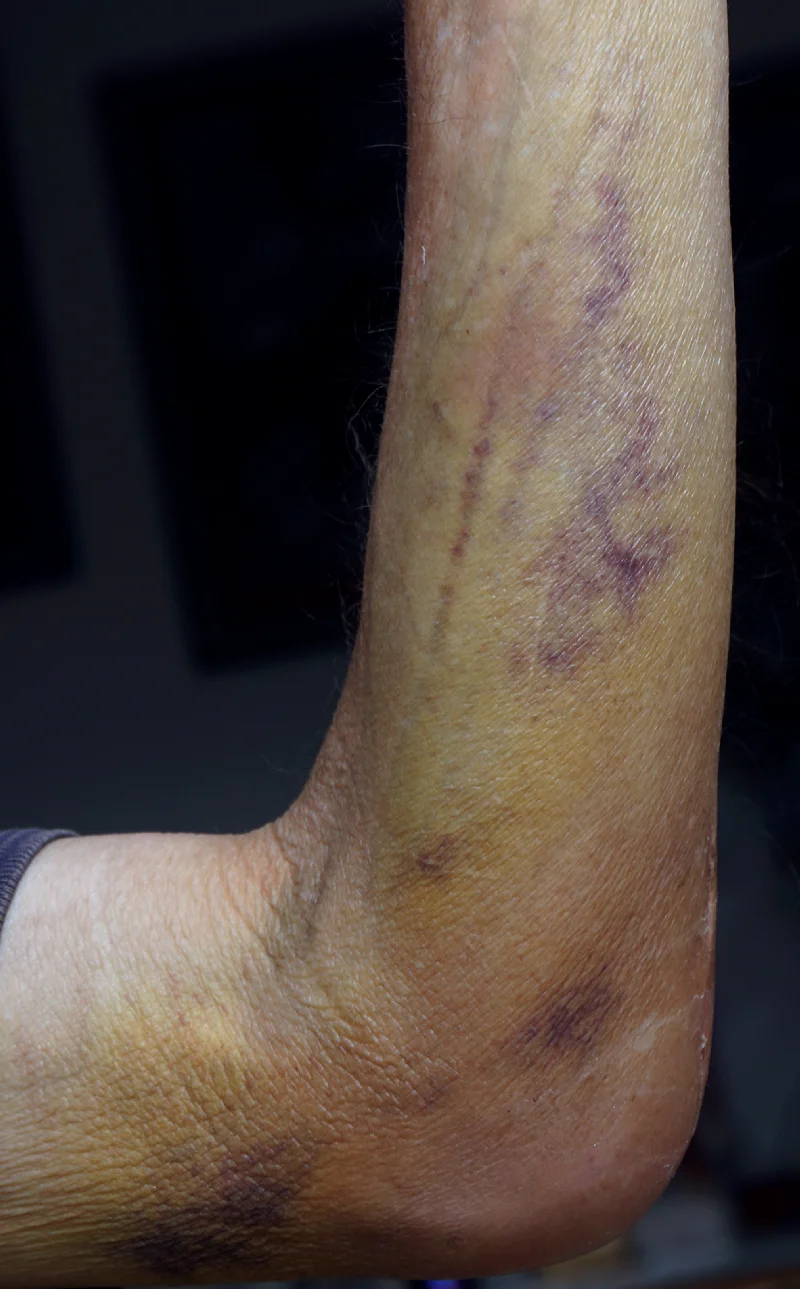
For example, the Health Database would provide me with information about the surgery I had on my elbow, and how to recover from it. As of 2026, the information about this surgery, and all other medical issues, is coming from individual citizens, doctors, and hospitals, and it is scattered around haphazardly. Each person is providing only one small bit of information about this issue. For example, this video shows what the surgeon does to join the two pieces of bone together, but it has music rather than narration. A Health database would allow me to find as much detail about this injury as I want, and, more important to me, what type of physical therapy I need to in order to regain the mobility of my elbow, and what to expect each day from the physical therapy, and how many weeks or months I should expect to continue the therapy. The People database that each city maintains would have details about each person's life, including their medical history. This would allow doctors, physical therapists, and scientists to observe who is healing faster from surgeries, bruises, broken bones, and other medical problems, and which medicines, physical therapy techniques, and surgical procedures seem to be the most useful. The doctor removed the splint on my elbow six days after the surgery, and it was swollen and had a lot of purple areas. Was my bruising typical? I have no idea, but a People database would allow us to compare ourselves to other people who have had the same type of surgery.  I
could not extend my elbow very
far, which made it difficult to walk, and I could not flex it very far, either, so it was
impossible for me to use my right hand to feed myself, shave, clean my
teeth, or button the top
4 buttons of a shirt. It also makes it difficult to get dressed and
undressed, and take a shower. I
could not extend my elbow very
far, which made it difficult to walk, and I could not flex it very far, either, so it was
impossible for me to use my right hand to feed myself, shave, clean my
teeth, or button the top
4 buttons of a shirt. It also makes it difficult to get dressed and
undressed, and take a shower.I saw the doctor 23 days after the surgery, and he said I should start bending my elbow a bit in both directions. I did not have much trouble extending my elbow or rotating my hands, but I could not flex my elbow to less than about 100°. When I tried to flex my elbow, it felt as if the skin on my elbow would tear open, and I would feel tingling sensations in my little finger and along the bottom of my palm. Is that tingling caused by nerves being stretched or compressed? Is it possible that I could break that nerve and become paralyzed in my fingers if I push too hard? How delicate are our nerves? Has anybody suffered from nerve damage from forcing their elbow to flex?
About five weeks after the surgery, I could extend my elbow quite a bit farther, but I did not seem to be making any progress flexing my elbow. When I tried to push my elbow into flexing less than 100°, my pinky finger and the lower part of my palm would tingle. Since my elbow was still swollen, I assumed that I might reduce the swelling a bit if I held my arm up above my head to drain out some of whatever liquid was in that area. So I put my arm up above my head, held that there for a dozen or so seconds, and then let gravity pull my arm down. Instead of my finger going numb, I felt a muscle or skin (I'm not sure which) stretch, which was the first time I had that feeling. So I did that for a while, and then let my arm down to give it some blood and recuperate, and then I repeated it.
If people could control their paranoia of being observed, then physical therapists would be able to collect data about how people react to physical therapy, and put the data into the People database. Software would eventually be able to analyze that information to help us determine which type of therapy is best for which type of surgeries and injuries, and how we differ in our reaction to the therapies.  That data would also show us what to expect in regards
to the progress we make each day in physical therapy. For example, the
software could give us an image, similar to that to the right, to give
us some idea what we can expect. That data would also show us what to expect in regards
to the progress we make each day in physical therapy. For example, the
software could give us an image, similar to that to the right, to give
us some idea what we can expect.Those drawings would be difficult for humans to create because it would require us to analyze a lot of data, but it would be easy for a computer. Collecting data and entering in into appropriate fields of a database is one of the jobs that most of us consider to be boring and monotonous, but eventually robots will be able to collect data about how our joints are bending, where we are swollen, and the temperature of the swollen areas. They would be able to collect more details, and more accurately, than we could do. By providing a robot with pressure sensors, it would be able to give us physical therapy and know how much pressure it is using, and it would know the angle that it is making with the joint. That would allow it to determine whether we are progressing as quickly as we should, or if we should change something about our therapy. The robots could also monitor the temperature of our joint, and its swelling. The human therapists would been needed only to supervise the robots and analyze the data.  As of 2026, we must guess at
when we should do physical therapy, how long to do it, how much
pressure to put on our joints, and how long to
rest before doing it again. Perhaps in the future robots will be able
to use ultrasound, temperature, or terahertz sensors to determine when
a person should stop the
physical therapy, and when the skin or muscles have rested enough to
repeat the process.
Every day I can flex my elbow a few more degrees, but then the next day it seems to have lost some of that flexibility. It reminds me of that expression of taking "two steps forward and one step back". As I write this particular paragraph, it has been ten weeks after the surgery. I can now flex my elbow enough to feed myself with my right hand, although it requires a bit of pressure and discomfort, and my pinky finger is now tingling slightly all day. Is that tingling normal? How many more weeks do I have to go through this before I can flex my elbow all the way? Will the tingling in my finger eventually go away? Or am I causing permanent damage by pushing too hard? We are producing a lot of fictional books, movies, and TV programs, and we have access to a lot of Hollywood gossip and sports data, but there's not a lot of information about human health. Medical robots would also be useful for collecting data about children, and passing judgment on whether they are developing properly. For example, once a year some medical robots could be sent to the schools to collect data about the children's height, weight, reflexes, eyesight, hearing, and whatever other tests we have the technology for. By having the children walk over a pressure pad, the robot would be able to determine whether the pressure on their feet is normal. The children are wearing clothes in the image below, but they would be naked. That would allow the robot to analyze their posture and how they walk, and do other analyses, such as use a thermal or terahertz sensor to determine if they have circulation problems, abnormally high temperatures, bruises, or cancers. The robots would also be able to identify whether any components of their body are developing abnormally.  Eventually the robots will be
able to take a video of person's
foot
and create a 3D mesh of it, and put that mesh, along with the pressure
data, into his entry of the People
database. The robots at the shoe factory would be able to use that
data to create a shoe for each foot.
If a person discovered that one both of his shoes was uncomfortable, or wearing down in a strange manner, he could provide that feedback to the shoe store, and that feedback would be added to his entry of the People database, and the next time he needed a pair of shoes, the robots would be able to improve the design. By having cameras and robots in other areas of the school, the software would also be able to analyze how the children interact with each other, how they sit in chairs, and how often they cough, blow their nose, and sneeze, and which times of the day and year they are most likely to do such things. That would allow a lot of data to be collected about the growth of children and their health without bothering people with the unpleasant, monotonous task of data collection. Also, the robots would be able to gather the data at a faster rate, more accurately, and enter it into the appropriate fields of the health database with fewer mistakes. I now appreciate elbows! We often don't appreciate something until it is taken away from us, and I never appreciated my elbows. Instead, I considered elbows to be a nuisance because I would occasionally bump the nerve running along my elbow, which not only irritated me, but made me wonder how any adult could believe that a supreme being would create humans with such a flaw. I have always appreciated my knees and hips because I have encountered people using canes, walkers, wheelchairs, and crutches, but I never noticed somebody whose elbow didn't bend, so I didn't realize that we need that feature for a lot of things, such as feeding ourself and buttoning our shirt. We don't even hear about elbows in regards to meals. We eat oxtail, liver, pork shoulder, chicken legs, chicken thighs, ribs, and tongues, but has any butcher or restaurant offered elbow? We must eliminate criminals, not fear them The robots as of April 2026 are too primitive to perform the type of surgery I had on my elbow, but eventually the surgeons will be able to supervise robots that have such thin fingers, manual dexterity, tiny cameras, and other senses, that the robots would be able to perform surgery with smaller incisions, at a faster rate, and with less trauma to our bodies. They might also be able to many surgeries with local anesthesia. Unfortunately, some people, such as "the godfather of AI" and some "scientists", promote fear of robots and software. The Anthropic company is involved with developing AI software, but they seem to be the world's leader in promoting fear of AI software. They recently created Mythos, which is AI software that is designed to find flaws in other software, and they claim that it is so potentially dangerous that they are afraid to release it to the public because criminals might use it to hurt us. Anthropic is correct when they warn us that criminals can use the AI software to hurt us, but almost every product can be used by criminals to hurt us. For example, criminals can use razor blades, knives, automobiles, airplanes, pain medication, and even glass bottles to injure or kill us. Some criminals have used zip ties, duct tape, and rope to tie people's arms and legs together, and to choke them to death. Criminals can use anti-freeze to kill their spouse, and use matches and gasoline to start fires. Criminals can also use telephones and email to manipulate, deceive, exploit, and cheat us. Dr. David Relman recently "felt a chill run down his spine" when AI software showed him how he could massacre people by modifying a pathogen. Was he truly worried that criminals would use AI software to create pathogens? I almost felt a chill run down my spine when I wondered if Dr. Relman and other influential people are promoting that fear to help a Zionist crime network exploit us goyim. It is likely that some criminals will use robots and AI software in their crimes, and that some people will inadvertently or deliberately hurt themselves with robots and AI software, but we are fools to react to those mentally disturbed people by being afraid of them. The people who promote fear of software, robots, or criminal should be prohibited from influential positions. Some of them might be ignorant, stupid, or lack the ability to control their fear of the unknown, but it is likely that many of them are criminals who are trying to manipulate us. This technique is often referred to as "Problem, Reaction, Solution". Anthropic recently created The Anthropic Institute to "confront the most significant challenges about how powerful AI will impact the world around us". We should consider the possibility that the Anthropic executives are promoting fear of AI software in an attempt to frighten us into accepting their offer to protect us from it, similar to how Jews promote fear of Nazis, Holocaust Deniers, and anti-Semites, and offer to protect us from those evil people by arresting them and censoring their "hate speech". Vice President Vance and Treasury Secretary Scott Bennett are two of the top US government officials who are so frightened of the AI software, or pretending to be frightened of it, that they are supporting restrictions on it in order to protect us. There are also people trying to frighten us into believing that the AI software is making it easier for the government to spy on us, and they imply that the government is spying on us for diabolical reasons. An example is this news report. The people who try to frighten us about the government spying on us are ignoring the enormous amount of evidence (or the baseless rubbish), that Israel and many Jewish organizations have been routinely spying on us for decades. Those fear mongers also ignore the evidence that many Jewish organizations are also routinely manipulating us with propaganda, and by murdering, intimidating, bribing, and blackmailing people, and by censoring YouTube videos, Wikipedia articles, and school books. They also ignore the evidence that many US government agencies have been infiltrated or dominated by Jews and their blackmailed puppets, and it is those Jews who want to spy on us for diabolical reasons. Our leaders are neurotic and dishonest The people who dominate our world today are promoting fear of crime rather than eliminating criminals because they are routinely involved with crimes. They do not have the talent to get into leadership positions by impressing us with their leadership ability, so they have to resort to crimes. Therefore, we should consider the possibility that they are promoting fear of AI software because they are planning to use AI software to commit crimes, and they want us to feel helpless to stop it. The 9/11 attack, the Epstein files, and other crimes provide evidence that we have leaders who have no problem getting involved with murders, kidnappings, tortures, pedophilia, censorship, and other crimes, so we would be fools not to consider the possibility that they are also involved with creating and using computer viruses, email spam, ransomware, and other crimes, in order to manipulate and exploit us. Every person in an influential position of the world today is lying about a lot of historical events and crimes, so we would be fools to believe what they tell us. It doesn't matter whether they are lying because they are afraid to tell the truth, or because they are involved with a crime network. None of them can be trusted.
There have been so many Jews who have lied about being Jewish and pretended to be Catholic, Christian, atheist, or Muslim that an expression has developed to describe the deception: "Crypto Jew". One of the reasons our government doesn't support a DNA database is because they don't want us to know their true ancestry. Also, note that instead of understanding why anger has been building towards Israel during the past few years, Lawler whined about anti-Semitism, and he said: "I'm not going to stop standing up for the Judeo-Christian values that are at the core of our nation." That is the type of response I would expect from a Jew, or one of their blackmailed puppets. To complicate this issue, many anti-Semitic attacks have been staged by Jews in order to manipulate us, so we should consider that this was another staged event. That would explain why William Paul immediately apologized. The event might have been intended to help Lawler get elected, or bring pity to Jews, or give a bad image to anti-Semites. If that was a staged event, the people involved should be considered as criminals for trying to manipulate us with false information. However, every nation's legal system is so primitive that even if we considered false flag operations and other tricks to be a crime, our law enforcement agencies don't have to investigate. For example, the FBI, MI5, and other law enforcement agencies around the world, are refusing to investigate, or giving us a false investigation, to certain crimes, such as the 9/11 attack, the Kirk murder, the Epstein files, the Holocaust, and the accusations by people such as Jenny Guskin and Vicki Polin. We should expect AI software to be inaccurate There are some people creating fear of AI software by claiming that it sometimes provides false information, such as this document that complains that "AI Gives 'Problematic' Health Advice Around Half The Time". The AI software is getting information about human health from humans, and that's why a lot of its advice is inaccurate. A person who cannot understand that is either ignorant, stupid, or dishonest, and he should prohibited from influential positions. If each of us could measure the accuracy of the health advice that we give to ourselves, our family members, and our friends, we would discover that all of us are giving some inaccurate health information. We would also discover that the AI software is giving more accurate health information than some of us. Our immune system is one of the most confusing aspects of our body, so we get lots of inaccurate diagnoses and information about immune related problems, such as arthritis, allergies, and lupus. There have even been television programs about people spending years going from one doctor to the next in order to figure out what their medical disorder is, and some of them eventually discover it is a problem with their immune system. Furthermore, businesses are distorting health information by trying to manipulate us into purchasing their products, such as by claiming that Crisco oil is healthier than lard, or that their particular medical device will fix some of our medical problems, even though they don't have any evidence to back up their claims. Grant Harting, a pharmacist, claims that businesses are deceiving the FDA about their medicines simply to increase their profit. (Of course, the FDA could be involved with that deception, rather than deceived by it.) We cannot expect useful health information from businesses until we develop a economic system in which businesses compete to improve our lives rather than to sell products. The people who complain that the AI software is giving us inaccurate health information are ignoring the fact that all of us are ignorant about health. Even experienced doctors occasionally make mistakes about somebody's medical problems. For example, this document claims that medical diagnostic mistakes are "one of the most widespread and underrecognized safety problems in modern medicine", and "that approximately 795,000 Americans become permanently disabled or die each year because dangerous diseases are misdiagnosed." Unfortunately, no society bothers to keep accurate statistics of medical problems, so those are just estimates of misdiagnoses. Everybody today should be required to understand a fact that should be obvious; specifically, that the AI software provides us with inaccurate health data because it gets its information from humans, and the humans are doing nothing to ensure that our health information is accurate or organized. Humans can provide accurate answers to arithmetic problems, but we can't explain much else about the universe. Furthermore, there are religions, Zionist groups, and businesses that are providing deceptive and false information to promote their particular product, philosophy, or propaganda. We must expect the AI software to give us inaccurate information about most issues. For example, we would be fools to expect it to explain why the large dinosaurs are extinct; whether Apollo astronauts landed on the moon; whether Jews really are the superior race; or how the universe was created. The people who complain that the AI software is sometimes giving us inaccurate health information, or that the AI software is encouraging paranoia, delusions, and suicides, should be regarded as uneducated, neurotic, or fear mongers. They should not be allowed to influence our culture, and the law enforcement agency should investigate them to determine whether they are trying to create fear in order to manipulate us. The low-quality humans ruin AI software The AI software gets information from humans, but no culture passes judgment on which humans ares providing useful information. This has allowed children, mentally ill people, members of Zionist networks, religious fanatics, and idiots to create millions of videos, documents, school books, magazine articles, and scientific reports that contain nonsense, lies, mistakes, and propaganda about global warming, religion, the Holocaust, and UFO's. Even worse, government agencies, including the FBI and other law enforcement agencies, are allowed to censor information and provide us with false information. There are also people producing deceptive videos and images with AI software for a variety of reasons, such as to make money from YouTube videos, or to manipulate our opinions. The religious people tend to be especially detrimental because they don't believe that they need scientific evidence to support their documents or videos. Instead, they promote the concept of "having faith", but what is faith?
 If we were living in an environment in which the adults
were responsible, considerate, and intelligent, it would make sense to
teach children to have faith
that the adults are providing them
with sensible advice. If we were living in an environment in which the adults
were responsible, considerate, and intelligent, it would make sense to
teach children to have faith
that the adults are providing them
with sensible advice.Likewise, if every organization had appropriate leadership, it would make sense for the leaders to tell their dumber members to have faith in their policies and safety regulations. However, we will allow an organization to become dominated by criminals if we tell every member to have faith in their leaders. An organization needs a certain percentage of members to be critical of their leadership; demand their leaders provide sensible justification for their policies; and review their policies to ensure that they have truly been beneficial. An organization should not consist entirely of submissive, apathetic people. Every product is imperfect America's legal system is so primitive and corrupt that it allows us to file lawsuits against a product that has imperfections, and our journalists are so ignorant, corrupt, and/or mentally disturbed that they support such idiotic lawsuits. For example, on 6 March 2026, the New York Post published this news article, and the title started with: "Blowhard ChatGPT bot posed as lawyer convinced woman to fire her real attorney". The article describes the problem as: "Baloney spewing ChatGPT bot posed as lawyer and sweet-talked an Illinois woman..." The descriptions by the journalists have such childish and insulting adjectives to describe the situation that we should consider that the journalists are trying to stimulate our disgust and fear of AI software. We should also consider that they are doing this for a crime network. The woman, Graciela Dela Torre, filed the lawsuit, but since she has enough intelligence and education to create and file a lawsuit, she has the ability to realize what every adult today should be required to realize. Specifically, that the AI software is simply giving us information that it acquires from humans, so the information it provides cannot be considered any more accurate than what we get from government officials, scientists, professors, or when we search the Internet with "non-AI" software. Graciela Torre, our lawyers, and our journalists are treating computer software as if it is a criminal. Vandana Joshi filed a lawsuit blaming ChatGPT for the death of her husband, who was shot at a university by a man who used ChatGPT to get information about killing people. She and her lawyers are blaming the software by providing information to the man, but that is as stupid as blaming Google maps for providing a criminal with directions to a bank that he robs. We cannot improve our world until we raise standards for both our leaders and the public. Adults today must be able to use and understand modern technology. Any adult who doesn't understand how to use a knife, automobile, refrigerator, washing machine, or computer software should be considered too mentally incompetent for the modern world. They should either be put on restrictions, like a child, or evicted. If we had respectable people in control of our legal system, they would consider the possibility that some of the people filing lawsuits are doing so to make money, or create financial trouble for their competitors, in which case those people should be regarded as criminals for filing a deceptive lawsuit. The AI software provides references to its information so that we can check it sources. We should consider the possibility that Graciela Torre deliberately ignored those references because she wanted the AI software to give her some false information so that she could justify a lawsuit. We should also consider the possibility that she was working with a crime network, rather than doing this by herself. Robots and AI software are incredibly valuable technology, and we should be trying to improve them, not encourage fear of them. As of May 2026, the AI software and robots make a lot of mistakes and are quite crude, but we should deal with those problems calmly, not with hysteria, anger, lawsuits, pouting, or fear.  We should
regard the robots and
AI software as "new
technology" that is valuable and useful, but needs a lot of
improvement, similar to the airplane of 1910 in the photo
to the right. We should
regard the robots and
AI software as "new
technology" that is valuable and useful, but needs a lot of
improvement, similar to the airplane of 1910 in the photo
to the right.We collect detailed data about the weather, and we have software that can make increasingly accurate guesses as to the future weather conditions. If we were collecting detailed health data about everybody and our ancestors, we might eventually develop software that can make fairly accurate predictions of what type of health problems each of us will suffer from in the future. We should not tolerate fear mongers No culture yet has any concern about the value of information that people or organizations providing to us. This is allowing fear mongers to operate without any repercussions. This allows criminals to manipulate us with fear, and cause us to waste a lot of labor and resources on security personnel, security devices, passwords, jails, and incorporating security procedures into software. When I was a child, some people were warning us that we should avoid the artificial banana flavoring, (isoamyl acetate), because it was an industrial chemical that is used to make lacquers, oil paints, and varnish. It is also flammable, and can irritate our eyes, skin, and lungs. I became frightened of the artificial banana flavor, but it is nonsensical to believe that we shouldn't eat something simply because industries use it for cleaning, solvents, or sanitizing. Almost every food contains chemicals that are used by businesses. Citrus oil, which is in the skin of lemons and oranges, is useful for cleaning. I have a bottle of citrus cleaner, and it does a wonderful job on oily things, such as cleaning coffee oil out of coffee cups. We eat citrus oil whenever we eat lemon or orange zest, or orange marmalade. In large quantities, citrus oil is dangerous, but that is also true of oxygen, water, sugar, and salt. Since every culture is promoting anti-evolutionary nonsense, no culture regards the human body is a chemical factory, and that all of the items that we eat and breathe have to be within certain limits. We need oxygen, water, and vitamin D, but we will die if we have too much. To complicate this issue, each of us is genetically unique, so the level of a chemical that is "too much" will be different for each person. Furthermore, the level of a chemical that we need will be different at different times of the day, and at different ages. For example, we need more salt when we perspire a lot. There are also some chemicals that do not have any health benefits, or are dangerous to us, but are not harmful in small quantities because our body evolved to deal with those chemicals. An example is ethyl alcohol. Many foods that are healthy for us contain chemicals that can be used for making glue, coloring objects, cleaning, killing rats, and insecticides. The people who warn us not to eat those foods are giving us inaccurate information because they are ignorant, stupid, or trying to manipulate us. Criminals can manipulate us with false information The 9/11 attack is an example of criminals manipulating us with false information. By claiming that we were attacked by some Muslims who live in caves, they frightened millions of American and British citizens into believing that we must attack and kill those murderous Muslims. Criminals can also promote fear in order to distract us from something; hurt their competitors; or to instigate anger towards police or government officials. For example, the mysterious group that calls themselves Wall Street Apes have recently been posting a lot of frightening remarks about food, such as this warning that McDonald's scrambled eggs contain: "an ingredient derived from Black Mold"; specifically, citric acid. They also warn us that "Citric Acid in America is actually pretty controversial". In this warning, they point out that the Kellogg's Nutri-Grain strawberry bars are made with 40 different ingredients, such as "wallpaper glue". They conclude with the remarks: The FDA is completely worthless
Our food is a science experiment In this post, they warn us that the black olives in American markets "are picked green and unripe. They’re treated with lye, exposed to oxygen, and then stabilized with ferrous gluconate." It is frightening to realize that there is "ferrous gluconate" in our olives, but that is sold as pills as an iron supplement. Furthermore, most olives are picked "green and unripe", and treated with something, often lye. The Wall Street Apes are not providing us with a useful analysis of our foods or the FDA. Perhaps they are ignorant or stupid, but when we find somebody promoting inaccurate information, especially somebody who is secretive, we should wonder if he is a criminal who is trying to manipulate us with fear, lower the stock price of a business, intimidate some government officials, or distract us from important issues, such as the Epstein files and how we are being abused by an international Zionist network. It is idiotic for us to ignore the people who promote false, frightening, or deceptive information. We should provide ourselves with an environment in which we can trust the people we live with. Our law enforcement agency should investigate the people who provide us with false information, and if we determine that they are trying to manipulate us, they should be regarded as criminals, and they should be evicted from society. We should set higher standards for the information that people provide to us. If a person were to give is poisoned food, they would be arrested, and we need that the same attitude towards "poisoned information". We hurt ourselves with secrecy and deception The type of elbow injury I suffered from is regarded as "common" by some of the medical websites, but I could not find any statistics on how many are actually occurring each year. One of the nurses told me that that after I came into the office with a broken elbow, a woman came in later that morning with the same type of elbow injury. If we had a People database, we could determine how many people need these surgeries, and their age, weight, and other characteristics, and we might discover that a lot of the older people who need that surgery are slipping in bathtubs or kitchens. We would also be able to discover which accidents occur at which times of the day, which days of the year, and during which activities. That type of information would help us to understand why they happen, and how to reduce them. A People database would also allow us to notice that the amount of pain and bruising a person experiences from the surgery is partly dependent on how the person treats himself afterwards. A doctor might do an excellent job, but his patient might hurt himself due to his inappropriate behavior. In a democracy, the patients are allowed to blame doctors for problems with medical treatments. Doctors are expected to be perfect, but their patients don't have any responsibility to learn about their medical treatments or drugs, or follow the doctor's advice, or be honest with the doctor about their use of alcohol, marijuana, and other drugs. If we suffer from a complication of our medical treatment as a result of our irresponsible behavior, we are allowed to file a lawsuit against the doctor. The doctors, by comparison, are not allowed to file lawsuits against us for being irresponsible. A People database would help us determine how many medical patients are causing some of their pain, bruising, and other problems as a result of their irresponsibility, ignorance, or carelessness. That database would also show us that some people have more sickness, digestive problems, and other health troubles, because of their behavior, such as making inappropriate choices about meals or recreational activities. The database might also help us understand why some people are more likely to get bit by fleas and mosquitoes. For example, where I live, the wild animals leave fleas in our backyards, and I frequently get bit by them, but my mother never seems to get bit. She complains her skin is dry, and so is that the reason? What is the difference between our skin? A People database might also help us figure out if a person can increase the healing of his bruises, broken bones, or burns, or reduce pain, by altering his diet, such as increasing his calcium or certain vitamins. Some people claim that creatine can help our muscles, and this person claims that creatine can help people over the age of 50 improve their reflexes and thinking ability, but how accurate are the claims about about creatine, magnesium, and other vitamins, probiotics, and minerals? Can we reduce scar tissue or speed up the healing from surgeries, bruises, and injuries by drinking more water or increasing certain nutrients? Or do supplements only help the people who have trouble getting nutrients from their food? If I had been taking creatine in the months before I slipped in the kitchen, would my reflexes have been so much better, and/or my muscles so much stronger, that I would have avoided slipping, or only bruised myself rather than break a bone?
No culture has anything similar to a People database. Instead, every culture allows every adult, child, business, charity, religion, and other organization to promote any information they please, with no regard to its accuracy or usefulness, and even anonymously. No person or organization is held responsible for their information. This is resulting in what is essentially a giant, disorganized heap of information, much of which is worthless, contradictory, or deceptive. This requires us to spend a lot of time searching through documents and videos when we want information about an issue, and then we have to pass judgment on the accuracy of that information. Each of us is eating foods, exercising, and doing other things for our health, and all of us believe that we are making wise decisions, but all of us are making health decisions by picking through a giant pile of disorganized information that has no standards for quality, and then arrogantly assuming that we just made wonderful decisions.  None of us understands nutrition.
For example, when we toast
bread, grains, seeds, or nuts, are we destroying
nutrients or improving them?
Is it better for us to eat a mixture
of animal and plant fats, such as a mixture of lard, avocado
oil, corn oil, olive oil, and coconut oil, or should we eat only one
type of oil?
If people could overcome their paranoia of being observed, and their desire to be hide their unpleasant characteristics and behavior, then we could put everybody through routine medical analyses and put the data into a people database. That would allow us to start figuring out what type of diet or supplements can actually help a particular person, of a particular age, or with a particular health problem. That would allow each of us to have a much better understanding of our particular health issues. It would help us determine if we have any allergies or bad reactions to foods, or which vitamins and minerals we need supplements of because of an inability to get enough from our meals. It would also help us determine which of us benefit from caffeine, creatine, or other nutrient or drug, and for the people who benefit from some type of supplement, it would help them determine how much to use, and what time of the day to use it. It might also help us understand why a particular person benefits from something. For example, caffeine might help people who eat excessive amounts of salt by making them thirsty, thereby causing them to drink more water. Furthermore, routine medical examinations would allow us to have a better understanding of how our reflexes, eyesight, gripping ability, healing ability, and other characteristics degrade as we age, which would allow us to do a better job of compensating for the changes, such as changing our job or recreational activities. It would also help us realize when we need to be more careful about picking up items, and walking on slippery surfaces. If we can get over our inhibitions enough to have our waste products examined occasionally, we would learn which of us has a more efficient digestive system, who chews their food more thoroughly, and how the types and quantities of our foods affect the consistency of our poop and the creation of gases. A People database would also allow us to determine how our hair and eye color changes as we grow older, and how common those changes are. I and some other family members and relatives had blond hair when we were children, and it became increasingly dark blond during our teenage years, and became brown during our adult years. Is that phenomenon possible with our eyes, also? The reason I ask is because when I was a child, I was under the impression that my eyes were blue. When I applied for a drivers license, I described my eyes as blue, but when I look at my eyes today, they seem to be more of a grayish green. Was I imagining that my eyes were blue? Or did my eyes change color, just like my hair changed color? Some babies are supposedly born with blue or gray eyes, which become darker during the first year or so of life as their body produces more melanin. Our eye color can also change as a result of medical disorders. I have suggested that the People database include photographs and video of us at different times of our life, including 3D meshes of our body, so that we get a better understanding of how each of us changes as we grow older. I have photos of me as a child, but they do not have the resolution to determine whether my eyes were blue. However, in this photo, when I was four or five years old, my eyes look blue. My nose has grown larger since then, and it has become slightly pinkish during the past few decades. I initially assumed it was pinkish because it had been sunburned so often, and that it would return to normal by protecting it from the sun, but it didn't return to normal, so now I wonder if the pinkish color is due to some other problem. A People database with detailed data about everybody's recreational activities, eating habits, sleeping habits, and medical problems, would allow us to make a better judgment on why some people have pinkish noses, cancer, broken bones, and other problems. The database would also allow us to notice that people living in certain areas of the world have more cancer or other medical problems, and it would help us determine which foods and quantities cause digestive problems to which people, or increase farting, or cause constipation or diarrhea. It would also help us determine whether cocoa or chocolate can reduce the tendency of old people to pee during the night. The people who want the freedom to be secretive and deceptive are interfering with our understanding of health issues. We must stop pandering to people who are paranoid or ashamed of themselves. We must resist being intimidated into believing that we are cruel when somebody accuses us of prying into his life, or being nosy, or hurting his feelings. Some scientific studies are worthless A recent study of more than 100 million people has shown that married people had fewer problems with cancer than single people. This implies that we will reduce our cancer problems simply by getting married. The refusal of most people to believe in genetics, and that humans are apes, are making the incorrect assumption that married people are a random sample of the human population, and so are the people who have never been married, or who have been divorced, or who have miserable marriages. All of us have very strong cravings to be married. Therefore, the people who have been successful in forming a pleasant, stable marriage are not a random sample of the population. There is something different about them, but what? We do not yet have enough information about humans to figure that out, but I can see with myself that one reason some of us have not been married is because we are suffering from a health disorder that dampens our desire to get married, and/or causes us to behave in undesirable manners. A People database would show us that the people who have never been married have more serious genetic disorders with their mind or body. The same is true if we were to analyze the people who have trouble holding a job, or who do not want a job. I suspect that an analysis of the billionaires would show us that they are suffering from mental disorders, rather than physical disorders. The refusal to accept evolution is also causing women to make stupid assumptions about why women are in a submissive role. For example, some historians and archaeologists have discovered that women were in influential positions of some societies during the past few thousand years, but those societies were eventually dominated by neighboring groups that were dominated by men. The anti-evolution scientists conclude that the neighboring tribes were sexist, but in reality, all animals, humans, and other living creatures have to compete for life, and the male dominated societies eventually win the competition because men provide better leadership. This is also why the businesses and other organizations that are dominated by men tend to be larger and more successful than those dominated by women or children. A People database would also help us determine how our genetics are influencing our culture. The people who don't understand that our genetics affects our behavior would try to force left-handed people to be right-handed, and try to force homosexuals to be heterosexuals. I mentioned here that I think the southern accent in the USA is due to the English immigrants who were slurring their words as a result of their inferior genetics. Their accent was genetic, but many of the children who are growing up in that area today are capable of pronouncing words correctly, so their southern accent is the result of their environment. By knowing what is due to genetics and what is due to the environment, we will realize that it would be useless and cruel to force the people in the southern states to pronounce words correctly because if a person doesn't have the genetic ability, we will waste our time and torment him by pressuring him to speak properly. Americans are more religious than our European relatives, which the religious Americans believe is evidence that we are superior to the Europeans. However, if we had a detailed database of everybody's life, a comparison of everybody's life and behavior would certainly show us that the religious people are showing signs of an inferior mind. In the USA, most of us eat with a fork in our right hand, whereas many of our European relatives hold the fork in the left hand. Is that difference due to genetics or the environment? Some people put their tongue out when they put food into their mouth, and others merely open their mouth. Some people lick their lips by sticking their tongue in and out, and others do it by moving their tongue left to right. Some of us extend our pinky finger when we are drinking from a cup. When me and my two brothers had hair, it wanted to part on the right side of our head, which was the opposite of most of the other boys. A detailed database would help us out to understand why our customs became what they are, and which customs would be easy to change because they are environmental rather than genetic. Criminals have been abusing us for centuries The fear that AI software, robots, or a people database will allow criminals to hurt us is idiotic because we are already being hurt by criminals. The public has been allowing themselves to be abused by their leaders, crime gangs, charities, businesses, churches, and other organizations ever since we settled into agricultural villages, and the abuse is still going on as of 2026. For example:
Living in fear of crime is not helping us. We cannot prevent abuse by being fearful or secretive, or by creating more laws to prohibit abuse. For example, every government is prohibited from murder and pedophilia, but the Epstein files, Vicki Polin, and other people show that many of our leaders are involved with pedophilia and murders. The only way to prevent abuse, crime, and corruption to raise the standards for our leaders and the public. If an organization is dominated by people who are apathetic, stupid, or neurotic, then they are going to be abused and exploited. We must also eliminate secrecy because the only people who benefit from it are criminals. The People database should have as much data about our lives as we can tolerate and have the technology to discover, such as analysis of our waste products, the chemicals in our saliva, and how often we blow our nose or pick our nose. That detail would be much easier for each of us to discover what our particular medical problems are. However, when we provide everybody with secrecy, a person might not realize that he has a problem. An example that I mentioned in a previous document is that I met a man who discovered that his nose stop producing large amounts of mucus when he moved away from home to go to college. He eventually realized that he was allergic to the dog that he grew up with. If we had a People database, and if we had software that provided parents and doctors with analyses of how a child compares to other children, the software might have noticed that his nose was producing an excessive amount of mucus. His parents and doctors would then consider testing him to see if he is allergic to something in his environment, and eventually they would figure out that he is allergic to dogs. By getting rid of the dog, they would have allowed him to have a more pleasant childhood, and be less irritating to other people. He would have had a higher quality life. Most people are so ashamed of mucus that they hide their nose blowing and nose picking, so nobody knows whether their nose is producing excessive mucus. If people could accept the evidence that we are jumbles of animal characteristics, they could accept the fact that each of us has lots of genetic disorders, and we could stop being ashamed of our medical problems, and look for ways to deal with them. If we allow cameras in our bedrooms at night, some people might discover that their sleeping is disrupted by certain foods, or the times that they eat, or the quantities that they eat, or the recreational activities that they participated in that day. Do some of us sleep better when we have early dinners, and other people sleep better with late dinners? However, the secrecy about what happens in our bedrooms and bathrooms makes it difficult for us to know how we compare to other people, and what environmental issues are affecting our sleeping and bathroom habits. Before I began taking thyroid hormones, I frequently wore socks to bed because my feet would get so cold that i had a difficult time falling asleep. If we had a People database with detailed information on what we wore when we were sleeping, the blankets on our bed, and the temperature in the bedroom, software might have identified me as having a possible thyroid or circulatory problem. Throughout most of my life, I would frequently breathe through my mouth rather than my nose, and in this document I pointed out that I noticed that when I started eating sprouted grains instead of raw grains, I could breathe through my nose much easier. If robots and security cameras were collecting video of our lives, the software would have been able to point out that some of us are breathing through our mouth more often than normal. The software might also identify when it was happening, such as after eating certain types of foods, or during certain times of the year when certain plants are producing pollen. I also wondered why my eyebrows are almost invisible, and recently I discovered that Dr. Berg points out that one symptom of low thyroid is losing the outer part of our eyebrows. (This makes me wonder, can high thyroid levels cause excessive eyebrows?) I wondered why the palms of my hand and the bottom of my feet were yellowish, which some people assumed was jaundice, but some doctors claim that yellowish skin is one of the possible effects of low thyroid levels. My hands and feet became pink when I began taking the hormones, verifying that claim. My voice also changes throughout the day, especially after eating a meal, which this doctor claims is one of the symptoms of low thyroid levels. Could it also be due to other problems, such as a pancreas that cannot produce insulin in large enough quantities, or at a fast enough rate? If we would legalize cocaine, heroin, and other illegal drugs, and treat the people who use those drugs in a similar manner that we treat people who use insulin, caffeine, or nicotine, rather than torment, insult, or punish them, then they would not be ashamed of themselves, and that would make it possible for us to collect data about their drug use and its effect on their behavior and health. That type of data would help us get a better understanding of why certain people are attracted to certain drugs, what effect a drug has on different people, and whether any of the illegal drugs have a medical benefit. For example, Paul Stamets stuttered throughout his childhood when he talked to other people, which caused him to avoid socializing. He described his problem as: "Stutterers of my type do not stutter to animals or when we sing, but we stutter when we talk to people." He claims that when he was an adult, he decided to try psilocybin (magic mushrooms). The next day he discovered that he could talk to people without stuttering, although he didn't become completely normal. He described it as: "Though I’ll admit that when I met Bill Gates, I stuttered, and if I drink too much alcohol and I’m in a noisy bar, I can still stutter." His claims should make us wonder, can certain drugs help some people with certain types of mental or physical disorders? Does psilocybin have an ability to allow some people's brains to adjust some of its "wiring"? We will never understand if the illegal drugs have a medical benefit, or understand why some people are attracted to certain drugs, until we remove the anti-evolutionary people from leadership positions. Those people refuse to accept the fact that we have a brain that is a chemical factory that is designed from a haphazard jumble of ape genes and genetic defects. They promote the idiotic theory that the people who have problems with alcohol or other drugs are victims of drug pushers. A child's mind is designed to be submissive, and to mimic other people, so it is necessary for us to protect children from the people who promote drugs, but adults who use drugs are doing so because they want to use them. The younger a child is, the more protection he needs from drugs, but the older an adult is, the more absurd it is to believe that he is using drugs because of peer pressure or drug pushers. The reaction of the anti-evolutionary people to those who use heroin, psilocybin, and other drugs is to make the drugs illegal; punish, insult, and kill the drug users and drug dealers; and spray herbicides on the farms in South America and Afghanistan that are growing those drugs. As a result of their animal reaction to drugs, they create fights and hatred, and they learn nothing about the drugs, or why people use them, or whether the drugs have any medical benefit. Furthermore, their policy is allowing crime networks to thrive by selling illegal drugs. However, they refuse to acknowledge the obvious fact that their policy to stop drug abuse has a 100% failure rate. They refuse to experiment with another policy. The police officers and other people who die or are permanently disabled from their fights with "drug pushers" have wasted their life on a worthless activity. They also waste our resources. Our environment has a significant effect on our behavior, but all citizens of a nation are growing up in a very similar environment to one another, and family members are growing up in an even more similar environment, so the behavioral differences among family members and citizens is primarily due to genetics. We need leaders who can understand and acknowledge that humans are apes, and our genetics determine everything about our mind and body. Our genetics determines how well our brain adapts to our environment, and how quickly it can adapt to a different environment. The adults who have an attraction to illegal drugs, body piercings, pedophilia, and coprophagia have something genetically different about their mind and/or body, and there is no value in tormenting, insulting, or punishing them. We should study them and try to understand what it is that is different about them. None of us asked for the particular genetic characteristics that we have, so it is absurd for us to be ashamed of our characteristics. We must stop being afraid that other people will know the truth about us. We must stop hiding our mental and physical characteristics and start understanding them. We should also try to understand why some people want alcohol, caffeine, nicotine, insulin, thyroid hormones, aspirin, or antihistamines. Likewise, we should try to understand why some people have an attraction to Jesus, pet dogs, or abnormal amounts of sex. We hurt our team and ourselves when we hate, punish, insult, torment, shun, or file lawsuits against our team members who have different behavior. We improve our lives when we treat other people as friends, study one another, and experiment with our culture. Do the people who "like" coffee or wine actually like the "flavor", in which case they would not care if the caffeine or alcohol was removed, or are they attracted to the caffeine or alcohol? If a person is attracted to caffeine, alcohol, or some other drug, then we should try to understand what is different about them that causes them to have a favorable reaction to those drugs. Is it due to a genetic problem or an environmental issue? Wild animals don't need drugs, so why do so many humans need them? Analyzing ourselves requires that we control our embarrassment of our body and our particular defects. For example, our eyes and nose produce mucus, and our ears produce wax, and our mouth produces saliva, and the purpose is to keep those openings to our body clean. We should stop being ashamed or embarrassed if our body is producing too much mucus, or saliva that stinks. We should instead try to understand what is different about the people who have such problems, and whether it is due to a genetic disorder or an environmental issue. Human and other animals also produce scents for sexual purposes, and to identify us from other animals. Different races of humans are likely to produce slightly different scents, and each of us has some variations and/or defects in our scent producing genes, which results in some people having odors that are unpleasant to the majority of their particular race. Furthermore, when people of different races reproduce, their child may end up producing and/or desiring a scent that is foreign to the other races. The anti-evolutionary people encourage us to be ashamed of our bodily odors. They promote the concept that we should scrub ourselves with soap at least once a day in order to get rid of our natural oils and scents. That causes our hair and skin to become dry and uncomfortable, so they tell us to compensate for that by applying artificial oils. The businesses don't show much concern for whether their artificial oils and fragrances are dangerous, but there has been some research, such as this for synthetic musks, that show continuous exposure to them might cause health problems. Businesses are also putting artificial fragrances in soaps, air fresheners, and candles without much concern about their health affect because they are more concerned with increasing their sales. It is more sensible to study our body odors and oils, the smell of our breath, and all other aspects of our body, so that we can get a better understanding of ourselves, and how we should design our culture to improve our lives and health. We must also experiment with new attitudes towards sexual issues. The Epstein files, and the millions of women around the world who complain about lewd remarks, being groped, and being raped, should be considered evidence that we must alter our culture to reduce the obnoxious fascination with sex and women's bodies. Every culture is trying to avoid the evidence that we are apes, and that men have strong sexual cravings. Every culture is especially resistant to the concept that a man's sexual cravings increase each day until it reaches a point where he either masturbates or has an orgasm during his sleep. We must change our culture and acknowledge that masturbation is a normal part of our life. Every culture has reacted to our sexual cravings by prohibiting nudity, and by censoring information about sex, breast-feeding, childbirth, masturbation, and other issues. Some cultures have reacted by promoting the concept that women should also cover their faces or hair.
 Every
culture is trying to ignore our sexual cravings, but this is
causing boys to develop
obnoxious obsessions with women's bodies. Every
culture is trying to ignore our sexual cravings, but this is
causing boys to develop
obnoxious obsessions with women's bodies.It also results in adult men who have no embarrassment that their news agencies are providing them with news about "sideboobs" and "barely-there" bikinis. Likewise, every culture's reaction to bad breath is useless, such as producing breath mints, and every culture's reaction to excessive mucus is worthless, such as producing tissues and decongestants. A more sensible reaction to excessive mucus production, bad breath, and stinky bodies is to support research into what is causing the problem. We should study and gather data about our bodies, and how we differs from one another, and how our body is affected by the foods we eat, our sleep, exercise, and the chemistry of our blood. I personally have noticed that my breath doesn't have a weird "chemical scent" now that I take thyroid hormones, so some of the people suffering from bad breath might also have a health problem. The anti-evolutionary people are causing our culture to become unpleasant and idiotic, and they are also causing trouble for the Earth. For example, their refusal to believe that all animals reproduce excessively, and that most of the babies must die, and that the earth needs predators to control the population of animals, has resulted in them allowing deer, rabbits, rats, and other animals to have excessive populations. It also results in them believing that they are being kind when they capture mice and rats alive, and then release them in some other area. Their attraction to horses results in them wanting to protect horses rather than the animals that we find less attractive, such as opossums. They even refuse to acknowledge that the horses that are wild in the USA are an "invasive species". They also frequently release their pet animals when they get tired of taking care of them, rather than euthanizing them or feeding them to some other animal. That can result in foreign species becoming a problem in their area, such as the boa constrictors in Florida. They also believe that we can protect the earth by preventing people from altering it, and leaving it in its "natural" condition, but that is not true. The treat 'nature" as if it is a supreme being with intelligence. Humans can make the earth more beautiful than nature, but only if our modifications are based on science rather than anti-evolutionary fantasies. For example, we can allow more plants and animals to live in dry areas by digging some irregular pits and creating mounds of dirt in order to provide shady areas, and some low areas to collect water. Earthquakes, volcanoes, and floods sometimes create those type of modifications to the Earth, but humans can do a much better job than those natural disasters. We can also increase the plant and animal life in the barren sections of the oceans by adding rocks or artificial structures to provide areas for fish to hide, and for plants to grab onto. Many people complain about dams blocking rivers, and it is certainly true that some type of dams cause problems for certain types of fish, such as the dams that block salmon from getting to their spawning areas, but beaver dams increase the variety and quantities of plants and fish, and make a river more beautiful. Therefore, if we were to put some small dams in rivers that don't have beavers, we can improve the river rather than destroy it. In areas where there is mostly dirt and not many rocks, we can create piles of large rocks to allow small animals to have homes. In areas where there are not many places for bees to make a home for themselves, we could create something for them. The point of this section is that something that is "natural" is not necessarily better than something that humans created. Nature is not an intelligent entity. Therefore, we are capable of managing the Earth better than nature, but only if we base our decisions on science, rather than anti-evolutionary fantasies. If the oceans continue to accumulate salt, all life in the oceans will eventually die. Even though that would be a "natural" event, that doesn't mean the future humans should allow it to happen. Our ancestors millions of years from now might decide to pump some water into the desert so that it can evaporate and leave behind some of the salt, thereby allowing the oceans to remain full of life. Eventually they might have the technology to cut paths through mountain ranges to allow some moist air to get into the deserts. We must consider a child's pedigree The primary purpose of every animal and plant is to reproduce. Therefore, we have such intense cravings to take care of children that we regard them as "precious", and as "bundles of joy", and we often risk our lives to protect them. If we could control our emotional cravings, we would realize that human children are just young humans, and that they range from extremely defective to mildly defective. Furthermore, we would realize that some children are inheriting the genetic defects from their parents. For example, a woman who will kill her husband for money, custody of her children, or some Zionist plot to take over the world, is likely to produce children who have some of her undesirable genetic characteristics. The same is true of the children of rapists, crime members, homeless, unemployable, and mentally ill parents.
 It was sensible for prehistoric
parents to regard every child as
precious because nature killed the inferior children, but now that we
are preventing nature from doing that, we need to suppress our craving
to protect children and pass judgment on which of them should be
euthanized.
Unfortunately, determining which children are inferior is a personal opinion, not something that can be determined. For example, Vicki Polin's relatives would claim that people like me are defective because we are goyim, and we oppose pedophilia and the ritual killings of babies. We need to decide what we want the human race to be. This includes determining what people should like and dislike in clothing styles, hairstyles, recreational events, foods, and other customs. If some members of an organization refuse to follow their culture, their rebellious attitude will create a miserable environment for everybody, especially if they also fight, argue, and insult one another. For example, this person complained that some people on a cruise ship who were having breakfast in their pajamas, and a woman who approves of that clothing style responded with an angry remark. All of the members of an organization should be willing to voluntarily follow their customs. We would not want to live among people who are identical to us, but we need to be compatible enough to be willing to follow a particular culture. However, the only way a society can ensure that its members are compatible with one another is by controlling immigration and reproduction. We cannot create compatibility with laws, punishments, or insults. Farmers do not let every animal and plant reproduce. Instead, they decide which characteristics they want in the next generation, and they restrict reproduction to the animals that have those characteristics. Farmers pass judgment on the genetic quality of their animals and plants, and they sell the seeds and semen of the highest quality animals and plants. Almost everybody has the same attitude towards pet dogs. Specifically, they want the dogs that are the children of genetically superior dogs. They refer to this concept as the dog's "pedigree". We need to accept the evidence that humans also have a pedigree, and that we need to control both reproduction and immigration in order to create a pleasant society. |
| 3) We should reduce problems, not profit from
them In a free enterprise system,
businesses react to problems by trying to
profit from them, but a more sensible reaction is
to investigate why
a problem is occurring, and experiment
with methods to reduce the problem.
For example, investigating the people who have broken their elbows might show us that many of them are the result of old people slipping on floors, especially wet floors. If we were also routinely putting people through medical analyses, we might discover that as we grow older, our feet and hands do not grip as well as when we are younger, and our reflexes become more sluggish. With that type of knowledge, we would be able to conduct sensible experiments to reduce the problem of older people breaking their elbows, such as designing apartments for older people that have textured floors in areas that get wet, such as showers, bathrooms, and the surfaces around swimming pools, Jacuzzis, and saunas. We might also reduce the problem of slipping on wet floors by designing the floors of those areas to have a slight slant, and put a drain at the lowest location. I have suggested that when people reach a certain age, such as between 60 and 70, they are required to move into the apartments specifically designed for older people. That allows us to ensure that they are in apartments that are more suitable to them, and be closer to medical facilities, and not be a nuisance to the physically active, younger people. Nobody wants to move to an apartment that has been designed for old people, but we should not design our culture according to what we want. We should design our city, jobs, recreational areas, social activities, and all other culture, to reduce problems and improve our life. Every culture reacts to people who injure themselves by providing them with medical services, but those injuries are a burden on society because they require doctors, nurses, anesthesiologists, and other people to repair the damage, and it requires people to work in factories to produce the drugs and medical equipment, and it requires schools to train the people to do the medical services. The more injuries a society has, the greater the burden on the people. Nobody benefits when people injure themselves, except for the businesses of a free enterprise system. When we react to injuries by profiting from them, we are reacting to a problem like a stupid animal. When a baby injures himself, responsible parents look for ways to prevent that type of injury in the future. Our government officials should have the same attitude when citizens need medical services. In my proposed government, the Medical Ministry of the Health Division would experiment with methods to improve everybody's health, and reduce their need for medical services. By requiring the older people to move to special apartments, we might reduce a significant amount of medical injuries. This requires the older people be willing to accept life in those particular apartments. None of the old people should want to put carpets over the texture in order to make it feel better. Everybody should realize that nobody has a right to slip on floors, or have any other type of accident, because fixing their injuries puts a burden on society. This applies to people at their jobs, also. Specifically, nobody has the right to ignore safety regulations. Everybody should have a responsibility to be a productive citizen, and try to reduce their burden on other people. Nobody should have the right to go on risky hikes in the mountains and then expect dozens of people to search for them when they get lost or caught in a winter storm. Nobody should have the right to do dangerous stunts, such as riding skateboards on stairways, and then expect people to take care of them when they injure themselves. Nobody should have the right to lift absurdly heavy weights, and then expect people to take care of them when they break their tendons or bones. If a person chooses to take a risk by doing something that society discourages, such as putting carpet over a textured floor in their apartment, or riding a skateboard on a stairway, he should be regarded as irresponsible and unfit to reproduce, and we should consider putting him on restrictions. The democracies and free enterprise systems put pressure on our leaders to pander to the citizens, as if all of us are kings or queens. We are attracted to those systems because we are selfish, arrogant animals who regard ourselves as the most important creature in the world. A more sensible culture considers the team to be more important than the individual. The people who don't want to follow rules should be regarded as destructive and dangerous. The democracies and free enterprise systems promote the attitude of the squeaky wheel should get the grease, but a more sensible attitude is that the squeaky wheel should be put on restrictions, prevented from reproducing, evicted from society, or euthanized. |
| 4) Medical expenses
in the USA are absurd The hospital charged $33,000 for
my elbow surgery. (For people who don't know what the US
dollar
is worth, the base price of a Toyota Corolla is only $23,000.) Businesses
in the USA have so much secrecy that I can't figure out how that money
was distributed, but it looks like it was only
for the hospital, not the people
who did the surgery. I got significantly
smaller bills from the doctor's office.
I have the impression that most of the money that Americans pay for medical services is given to people who don't contribute to the medical care, such as investors, government employees, insurance companies, and hospital executives. The surgeons, anesthesiologists, and nurses seem to get only a small portion of the money that we pay for medical services. Likewise, the factory workers, technicians, and other people who produce, distribute, and maintain the medical devices, hospitals, and medicines also get only a small portion of the money. With the government I propose, one of the purposes of the Efficiency Ministry of the Quality Department is to reduce medical expenses to a minimum. Since all of the businesses and other organizations would be under the control of the city government, rather than independent entities that can do as they please, their use of labor and resources would be public rather than private, so everybody would be able to look at the database that shows the labor and expenses of every organization in the city. The Efficiency Ministry would not allow shell companies, or other tricks to deceive us. Furthermore, the Efficiency Ministry would look for ways of reducing the waste of materials, such as packaging materials and medical items. For example, in the USA, our medicines are usually given to us in orange bottles that are much larger than they need to be, and after we have used the pills, the bottles are either thrown in the trash or put into a recycling bin. It would be much more efficient to have smaller containers that are refilled when needed. Furthermore, the pill bottles are given childproof caps, but the only people who need childproof bottles are those who have children in their home. Therefore, I suggest that the adults who do not have children in their home be given medicines in more convenient containers. When grandparents want to visit their grandchildren, they would do so in one of the public areas, not their apartments, so they don't have to worry about children getting into their medicines. In the type of city I suggest, the adults without children would have their own apartment buildings, or their own apartment floors, so they would not have to deal with children. The elderly people would have their own apartments at the bottom of the buildings. Every apartment would be small, and designed for sleeping, grooming, resting, and sex, not socializing. The city would have lots of beautiful, spacious lounges, recreational areas, restaurants, and patios for people to socialize. When grandparents want to visit or babysit their grandchildren, they would do so at one of the public areas, not in their apartment. They could visit with the grandchildren by themselves at one of the smaller lounges, or go to a larger lounge and be with other grandparents and other grandchildren.  Grandparents could also babysit
their grandchildren at one of
the children's recreational areas, parks, restaurants, or swimming
pools.
In order to create a city in which we prefer to use the public areas for socializing, the public bathrooms must be much more pleasant than they are in America today. This would be more practical if everybody can control their inhibitions about bodily functions. For example, we could make bathrooms for men that are more compact, easier to clean, and much more pleasant to use, by designing them with troughs rather than individual urinals. One advantage of the troughs is that it eliminates the problem of pee splashing against shallow urinals. The troughs could also be designed with a rim that we knock our penis against to get rid of the final droplets, rather than shake it and splatter pee on ourselves and the bathroom. The text-to-image software doesn't understand the concept of that type of bathroom, but the image below might give you an idea of what it could look like. The image shows a trough that has the same height everywhere along the rim, but it could be designed with different levels for men and children of different heights, or the bathroom could have troughs of different heights.  Those bathrooms could also be
designed so that everything is
waterproof, thereby allowing the entire room to be cleaned with a
high-pressure water spray. Furthermore, every bathroom could have
different artistic decorations.
Peeing into a trough requires men to accept the evidence that we are monkeys with different sized and shaped penises. The men with tiny penises have to stop being ashamed of something they have no control over, and the men with large penises should not feel superior. No man should feel a need to stretch his penis to make it larger, and it is especially absurd for men to get into competitions to have the largest penis. Large penises are actually a nuisance. Ideally, our penises would shrivel up into a tiny stub when it is not in use, and our testicles would withdraw into our body. That would make it much more comfortable for us to walk, run, and sit. Children should be taught to discover what their particular characteristics are, accept those characteristics rather than be ashamed of the characteristics they don't like, and not feel superior to people who have different characteristics. Insulting a person who has an undesirable genetic characteristic is cruel, animal behavior that we should not tolerate. |
| 5) We benefit from humans, not animals My surgery brings up an
important issue that I've mentioned before: our lives have improved
during the past few thousand years because of people who did some useful work.
If a person a few centuries ago had broken their elbow like I did, he would have become severely crippled. The reason I can now have that type of injury fixed is because there are some people who are willing to learn useful skills and do useful work. The people who are making our lives nice are those who are providing us with carpentry, surgery, nursing, engineering, plumbing, machining, and other services, not the people who are struggling to retire early, become wealthy from investments, or consider a "dream job" to be doing almost nothing. The people who make our lives pleasant are the people that the public doesn't know or appreciate. Most people don't want to know about the people who are learning useful skills and providing us with food, housing, water, electricity, and medical services. Instead, they appreciate the people who entertain them, such as the Pope, Lady Gaga, Al Gore, Cristiano Ronaldo, Taylor Swift, and Queen Elizabeth. Animals do not have a desire to learn, think, discuss issues, look critically at themselves, or contribute something to society. During the past million or so years, humans have evolved a greater interest in learning, working, and cooperating with other people, but that evolution has not finished. Most people are still very similar to apes. Most people do not want to learn a useful skill or do useful work, which would explain why most people do not admire or appreciate the people who want to learn a useful skill. Women are adding to this problem by putting pressure on men to be wealthy, rather than putting pressure on men to become productive, responsible, and honest. Female animals do not care whether a male has useful skills, is honest, or treats other animals with respect. The female animals are only concerned about finding a male who is high in the social hierarchy, and can provide them and their children with food and protection. Although humans are more advanced, women still have that desire for a man who has a lot of wealth and status, and they don't have much concern about whether the man is honest or has useful skills. Some women will even get involved with men who have criminal backgrounds, or who have a history of abusive behavior. The Hollywood Walk of Fame attracts over 10 million visitors every year. How many people would visit a walk of fame for the people who are exceptional as plumbers, carpenters, surgeons, engineers, farmers, or technicians? Animals are designed to do the minimum amount of work necessary, and humans still have that attitude to various extents. This has resulted in the attitude of "work smart, not hard". This is the animal attitude of doing only what is necessary.  Animals work only when they have
to, and most people are not much
better. Most people go to school only because they are required to, and
they learn only what the teacher tells them to learn. They have no
desire to learn anything on their own, other than what they consider to
be entertaining.
Likewise, most people get a job only because they can't figure out how to avoid it, and they don't care whether the job has any value to them or society. While at their job, they do the minimum amount of work. We must pass judgment on who reproduces so that each generation has a more advanced attitude. Specifically, a desire to learn a useful skill, treat other people with respect, and contribute something of value to the team. Archimedes, Tycho Brahe, Isaac Newton, James Watt, and many other people have provided us with a lot of knowledge, but not because they were forced to do so by their teachers, parents, employers, or spouse, and not because they were trying to be rich or famous. They did so because they wanted to learn, think, and work. The people who work only because they cannot figure out how to avoid it are essentially behaving like the oxen that pulled plows during the Middle Ages. Those people are detrimental to society because, like oxen, they don't care whether they are doing something useful or destructive. They are also detrimental to our social environment because they frequently complain about "rat races", Hump Day", or "Monday", and they encourage people to fantasize about retirement, heaven, inheritances, and winning lotteries. They are also likely to promote jobs like this as "ideal". Although we benefit from the people who work only because they cannot figure out how to retire, the most beneficial and inspiring people are those who want to learn a useful skill and do some useful work. It is also interesting to note that the people who promote the concept of heaven are under the assumption that nobody in heaven has to get a job, go to school, do any type of work, or have any type of responsibility. They believe that God will pamper them like babies.  It is also interesting to note that religious people don't believe that they will become bored in heaven. Instead, they believe that lounging 18 hours a day, day after day, for trillions of years, will be wonderful. They are not people who want to learn a skill or do useful work. They want to live like a pet dog. The people who titillate themselves with fantasies of heaven are masturbating. The videos on the Internet that describe heaven should be regarded as "nonsexual pornography". The sermons at churches that promote heaven should be described as "public masturbation". Modern children need to be educated about animal emotions so that they realize that their desire to avoid "work" is intended to make animals work efficiently. Lounging is truly enjoyable and beneficial only after we have become tired from working and need to give our muscles or mind a rest. Unfortunately, modern children are picking up anti-evolution, Marquis de Sade attitudes because the world is dominated by people who behave and think more like animals than modern humans.  They
behave like male animals that fight
for dominance and females, rather than modern humans who work with and inspire one another to make life
better for everybody. They
behave like male animals that fight
for dominance and females, rather than modern humans who work with and inspire one another to make life
better for everybody.Imagine if we could live in a world in which every person wanted to learn a useful skill and do some useful work. Imagine never hearing anybody whine about "rat races", or fantasizing about retirement or winning a lottery. Imagine living among people who have no desire to be pampered by servants. Furthermore, imagine that everybody wants a job that allows them to contribute something that is of value to the team, and which other people appreciate. That would allow us to live among people who refuse to do dishonest or worthless jobs, such as manipulating children into desiring candy bars, or producing fraudulent products. Those type of people would create a wonderful social environment, but the only way we can achieve that type of world is by making major changes to our culture. |
| 6) We should be free
to analyze our health by ourselves In addition to maintaining a People
database with details of our lives, I suggest that the government
support "Health
Clubs" that everybody has free access to,
and which have a lot of medical equipment that we can use to analyze
ourselves. The clubs would have supervisors with experience in medical
analyses for people who needed assistance.
The clubs would need restrictions on the dangerous analyses, such as x-rays, and they would not provide the rarely needed or very expensive analyses, but there are a lot of analyses that the club could offer, such as analyzing some aspects of our blood, hearing, eyesight, saliva, waste products, oxygen consumption, reflexes, and the gripping ability of our hands and feet.  The city could have health clubs
scattered around so that it's easy for us to get to one during our
leisure time. Every club would have different designs to
make them less monotonous, and to make them feel like a room in our
home rather than a bland hospital operating
room.
The medical devices that are expensive, seldom used, or difficult to use, would be available at only in a few of the health clubs, but everybody would have access to those clubs. By analyzing our own health on a routine basis, we would be able to gather data about our health without bothering doctors and nurses, and we could do it at our convenience, rather than at the convenience of the doctors and nurses. As the robots and medical devices become more advanced, the data would be put into the People database by the machines, so nobody has to bother with manual data entry. The analyses would help us understand what sort of medical problems we have, and how they are affected by food, pollen, mold, sleep, age, recreational activities, and time of day. We would also be able to observe how we degrade from age, such as testing the toughness of our skin to help us determine when it is becoming so delicate from aging that we have to be more careful about splinters and cuts. We would also be able to compare ourselves to other people to determine if any of our components are degrading sooner than is typical.  I had a
blood test prior to surgery, but there is no easy way
for me to find out what the results mean. We do not yet have a health
database that provides us with easy access to that type of
information. (Click the tiny image to the right to see one page
of my blood test results. Do you
know what any of those results mean?) I had a
blood test prior to surgery, but there is no easy way
for me to find out what the results mean. We do not yet have a health
database that provides us with easy access to that type of
information. (Click the tiny image to the right to see one page
of my blood test results. Do you
know what any of those results mean?)The clubs would have robots to explain the common questions to us so that we don't bother the supervisors, doctors, nurses, or other people. The supervisors of the club would help us understand the issues the robots did not know how to answer.  I had my blood test at 5 PM, and I had not eaten since
11:30 AM, but it showed my blood glucose as above normal, as seen in
the image to the right. I had my blood test at 5 PM, and I had not eaten since
11:30 AM, but it showed my blood glucose as above normal, as seen in
the image to the right.Do I have a problem with my blood sugar? I've checked my blood sugar before, but it was always in the "normal" range, although often at the high end of normal. The result is that nobody considers me to be diabetic, but if we had a database with everybody's health information, I would be able to compare myself to other people to see who else has blood sugar that is frequently in the high end of normal. I might discover that most of us with this characteristic are suffering from some minor medical issue, such as our voice or eyesight changing after meals, or feeling tired after a meal. The Health clubs would make it much easier for us to test our glucose, hormones, blood pressure, and other characteristics because we could do them at any time of the day or night. It would also be beneficial if the clubs provided a robot, or a robot arm on a table, to do pinpricks for such things as glucose monitoring strips, since most of us have problems poking ourselves with needles. The employees of the health clubs could do the more difficult tasks, such as sticking needles in our veins to get enough blood for a hormone test. In California, that type of club would be prohibited because we have to get a doctor's prescription for a blood test, then we have to go back to the doctor to see the results. It is more sensible to legalize medical tests, and stop trying to protect lunatics from abusing the tests. Furthermore, the results of the tests should be considered public knowledge and put into the health database so that everybody can learn from it. Furthermore, when doctors prescribe drugs that we will be using for the rest of our lives, such as insulin and thyroid hormones, it is absurd to limit those prescriptions to one year. That is not protecting anybody from anything. Instead, it causes millions of people to travel back and forth to doctors to get new prescriptions, which wastes the time of the person and doctors, and it also wastes fuel and increases traffic congestion. If we were collecting detailed data about everybody's lives, we might discover that dozens or hundreds of automobile accidents in the USA are happening while people are traveling to or from a doctor's office to get a prescription renewed. No culture demands government officials review their laws to determine whether they are truly beneficial, and this allows them to enforce laws that are useless or detrimental. America's government system was created when there wasn't much medical knowledge or testing. The first hospitals in the 13 colonies were extremely primitive. As a result, the U.S. Constitution was written by people who were not concerned about medicines or healthcare. Decades later, when businesses began selling fake medicines, the ignorant and idiotic government officials reacted by trying to control the situation with laws and punishments. Our government officials are still so ignorant and/or stupid that they don't care whether any of their laws are serving the purpose they were designed for. As a result, they continue to insist that they are protecting us from heroin, insulin, and fentanyl with their laws and jails, while giving us free access to all sorts of dangerous things. For example, they give us free access to aspirin, isopropyl alcohol, gambling casinos, pornography, lottery tickets, chlorine bleach, ammonia, acetone (in nail polish remover), and many other potentially dangerous items. Adults have free access to ethyl alcohol to drink, but if we want to use it for sanitizing, fuel, or cleaning, our government requires that it be poisoned. We need to make a radical change to our culture. We need to acknowledge the evidence that humans are a species of ape, and that animal behavior is genetic. Therefore, we cannot control the badly behaved people with laws, punishments, religious sermons, insults, glares, or prescriptions. We also need to put an end to the hypocritical attitude that that the public is too stupid, irresponsible, uneducated, and/or neurotic to handle the freedom to have free access to medical drugs and ethyl alcohol, but we are so intelligent, educated, and responsible that we should have the freedom to vote for our leaders, and have as many children as we please, and we even have children that we have no desire and/or ability to take care of. If a person is too stupid, irresponsible, or mentally disturbed to handle ethyl alcohol, insulin, oxycodone, or thyroid hormones, he should not be allowed to vote, influence the economy, have a leadership position, or have children. We must protect children from a lot of dangerous and detrimental items, activities, locations, machinery, animals, and concepts, but one of the radical changes we need to make to our culture is that we should regard an adult who cannot follow laws, or shows other childish characteristics, as an inferior adult who needs to either be put on restrictions, like a child, or evicted from society. We should stop designing our culture for the worst behaved people, and design it for the best behaved people. That would make life more comfortable for most of us. I've given an example of this in other documents, such as it would allow us to put "rinsing tunnels" in the city parks were we could take our clothes off, walk through the tunnel to be rinsed of perspiration, and then put our clothes back on. The women would not have to worry about men making lewd remarks or bumping into them, and the men would not have to worry about being insulted for having funny looking bodies or penises. Imagine if you were to meet in adult who became angry or hysterical if he saw a person with naked hands. Imagine him demanding everybody cover their naked hands with gloves. Imagine him also making lewd remarks about naked hands. We would regard him as mentally disturbed, and as destructive to our social environment. We should do the same with adults who cannot handle naked bodies, medical drugs, masturbation, sex, digestion, waste products, ethyl alcohol, and other products and issues in a modern society. We should stop pandering to the people who behave like animals. If people could control their inhibitions about bodies, it would be easier for us to do health analysis of ourselves. For example, a person could walk into a health club, take off his clothes in front of other people, and have infrared cameras determine whether parts of his body have circulation problems, or how is circulation changes as he walks a run or runs on a treadmill, or after he has had some coffee or food. Those cameras can also help identify potential cancers, bruises, and other problems. It would also allow us to see how our body's heat production compares to that of other people. By accepting nudity, we would not have to provide the health clubs with lots of separate, isolated rooms for people to hide their naked body. Eventually robots will be advanced enough to conduct some of the health analyses for us, and provide us with an explanation of the results. By that time the terahertz instruments might be advanced enough to allow robots to provide that service, also, including an analysis of the data. The text-to-image software doesn't understand the concept of robots performing medical analyses, but the image below might give you some idea of how we could visit a health club during our leisure time to have a robot perform a medical analysis and provide us with an explanation of the results.  It would be impractical to have
doctors and nurses conduct tests on everybody in the city on
a routine basis, but when robots and medical instruments become more
advanced, and when blood analyses can be conducted with smaller amounts
of blood, we will be able to easily
and quickly gather health data
about ourselves without becoming a burden on
the nurses or doctors.
Why are we living? It will require a lot of our resources to scatter health clubs around a city, which brings up an important issue that I've mentioned in other documents. Specifically, what do we want to do with our lives? How decorative, quiet, and clean do we want our city to be? Should we devote a lot of the surface area in the city to roads and parking lots for automobiles, or should the transportation be underground? How beautiful should we make our restaurants, lounge rooms, offices, and factories? How much of the city's land do we want to dedicate to golf courses, soccer fields, foot paths, bicycle paths, and sports stadiums? How decorative do we want our swimming areas to be? Do we want our walkways to be gray concrete slabs? Or do we want them to be decorated with tiles, rocks, or tiny LEDs so that we can see them easily at night without the lights being so bright that it becomes annoying? What do we want to do with our lives? Why are we living? Why are we working? What should our goals be? Do we want any of our public buildings or clothing items to be as decorative as the AI software can create, such as the image below. or in this video? Do we want any factories or robots to be capable of decorating walls or furniture in the amazing color schemes and gradients that the AI software can create?  The AI software is now, as of 2026, more creative than humans, and can create photos and video better than human artists. Although the furniture and buildings are usually unrealistic, and violate the laws of physics, the creativity and decorations are impressive. Rather than fear AI software, we should improve it, and we should use it to make our furniture, buildings, machines, recreational areas, and clothing more beautiful, and to make robots to do the tasks that we don't enjoy doing. In a democracy and a free enterprise system, businesses and government officials are pandering to public, but most people have no interest in getting together to experiment with their city. Instead, most people want entertainment. Unfortunately, titillating ourselves with candy, fantasies of heaven, Hollywood movies, gambling casinos, government lotteries, insults of other people, status products, and shopping, will provide only momentary pleasure. It does not improve our life, or give us memories that we enjoy reminiscing about when we are elderly. I think we would have a more satisfying life if our cities consisted of beautiful, clean, quiet buildings that are surrounded by nature, and when we are living among people we respect rather than fear. Decorating some rowboats with jewels might be a bit extreme, but I think that would be that would be more beneficial to us than putting our labor and resources into yatchs and mansions for billionaires.  We benefit by comparing ourselves to one another By putting all of the health data into a publicly accessible database, everybody will be able to compare their health characteristics to that of other people. That type of comparison can help each of us identify our particular health problems, and determine whether some parts of our body or mind are degrading faster than typical. The database would also show us which injuries tend to occur at which age in our life. For example, we might discover that most of the people who break their elbow and need Olecranon Orif surgery are over the age of 60, and that they are having those accidents because their feet become less able to grip the floor, and because their reflexes are slower. By providing the health clubs with instruments to test the gripping ability of our hands and feet on both dry and wet surfaces, we would be able to collect data about our gripping ability and how it changes as grow older. Each of us would be able to determine when our gripping ability starts to decrease, in which case we would realize that we need to be more careful about dropping items and slipping. By providing instruments to test our reflexes, we would discover when our reflexes are decreasing. Some people's health problems are trivial, but it is impossible for a random mixture of genes to create a person with "perfect" health. Therefore, all of us would benefit by having as much knowledge about our particular problems as possible. Would you abuse medical drugs or devices? The concept that we are protected by making medical devices and drugs by prescription only is idiotic. For example, if blood tests were freely available right now, I suspect that almost everybody would resist them, and take them only when they were truly interested in analyzing their blood. Furthermore, we risk having a vein collapse if we get too many blood tests in the same location of the same vein. Therefore, everybody with a functional brain is going to resist blood tests. Veins can collapse fairly easily, so it would be useful if we put more resources into developing blood tests that can use such tiny amounts of blood that we don't have to poke our veins with needles, similar to how diabetics can use a tiny drop of blood to check their insulin. Our thyroid hormones affect such things as our production of heat and energy, the chemicals in our saliva, and probably a lot of other aspects of our body, such as our reflexes, voice, eyesight, and concentration, it might be possible to estimate a person's thyroid levels without a blood test. For example, perhaps we could press something cold against our skin and then observe how quickly it warms up, or analyze the chemicals in our saliva, or observe our brain activity as we do some mental task. My voice changes after a meal and in the evening, perhaps because my body cannot properly control my thyroid levels or blood sugar, so checking my voice might be another way of getting an approximation of my thyroid levels and/or blood sugar. Those type of tests would have to be calibrated with blood tests for each person, and they probably would not be as accurate as a blood test, but they might be useful anyway. Eventually robots will be so advanced that they will be able to use that type of data to observe our voices, posture, or eye movement to help us determine whether we are becoming sleepy, or losing our concentration. That would be especially useful for people who are working with machines or providing medical services. Although some people have only trivial health problems, even they would benefit by analyzing themselves and discovering what their problems are because that would allow them to look for a way to reduce the problem, and a trivial improvement in our health is better than nothing. Furthermore, even if we do not have the knowledge to reduce a health problem, being aware of the problem can help us avoid aggravating it. We should care about the quality of life I consider my low energy levels to be giving me an unacceptable quality of life. People like me should not reproduce. However, there are millions of people who I would describe as having genetic disorders that are much worse than mine. I would much rather have my energy problems than migraine headaches, bipolar disorder, or an inability to accept or understand evolution. I have the impression that a significant percentage of the population never truly enjoys their life. Instead, they waste their lives on a search for happiness, usually hoping that happiness will come from material wealth, status, sex, babies, traveling, being pampered by servants, dangerous sports, or religion. There are also people using alcohol, marijuana, or other drugs to reduce their misery. Even worse are the people who come to the conclusion that their misery is the result of other people, such as their parents, sexists, racists, anti-Semites, or corporations. They hate, fight with, insult, and torment the people they believe are ruining their life. Some of them go even further and try to kill the people they believe are ruining their life. Some people are supposedly blaming AI software for their misery, such as the man who tried to set Sam Altman's house on fire, and the men who drove by his home and fired a gun towards his house. As the robots become more advanced and numerous, we might soon find people blaming their misery on robots, and attacking the executives of the robot companies.  No
culture yet cares about the quality
of anybody's life. We are much
more concerned about the quality of life of our pets and farm animals. We will "put animals
out of their misery", but not
humans. This attitude is resulting in
millions of people having miserable lives, especially their final years
of life. No
culture yet cares about the quality
of anybody's life. We are much
more concerned about the quality of life of our pets and farm animals. We will "put animals
out of their misery", but not
humans. This attitude is resulting in
millions of people having miserable lives, especially their final years
of life.Our natural tendency is to believe that having a long life is better than having a pleasant life because we inherited that primitive attitude from animals. Animals don't care about the quality of life. They only care about surviving and reproducing. The people who have no concern about the quality of life believe that they are better people than the rest of us, but they are actually more mentally similar to an animal than a modern human. They are tormenting the misfits, retards, homeless people, and and elderly people, not loving them, or trying to improve their lives. What is "stamina"? Why can some people run marathons, while other people can only run a few hundred meters? Why can some people enjoy working for 8 to 12 hours, and other people are fatigued after only a few hours? How does our stamina change with age? How is stamina affected by food, allergies, caffeine, and sleep? Why can some people eat snacks while running a marathon, whereas other people get a stomach ache or feel sick if they do physical activities after eating, and some people want to take a nap after a meal? We will get a more accurate understanding of these and other health issues by creating a health database with detailed information about everybody. We should consider updating our surname custom When we start collecting data about everybody's life, it would be better if we didn't confuse ourselves with our names. The current custom for naming children is for parents to choose a first name for the child, and one or more optional middle names, and to give the child the same surname as his father. When a woman gets married, it is typical for her to change her surname to her husband's surname. We also allow people to change their names simply because they don't like their names. I suggested that the government choose the first names for all children, but when we are restricting reproduction, some of the people who are authorized to reproduce will have to provide children for adoption. This creates the dilemma of what surname the adopted child should have. My recommendation is to eliminate surnames, and for the government to choose a unique combination of a first and second name for a child. That will give every child a unique name, and he will keep that name throughout his life regardless of whether he is raised by his biological parents or is adopted. Nobody would have the freedom to change their name. Children would keep their name the government gave them even if they're adopted or biological parents died, and they were raised by some other couple. When women get married, they would keep the name the government gave them, rather than change to their husband's name. When they have children, the government gives their children a unique name that has nothing to do with names of either of the parents. Although this might seem bizarre, it is similar to what zoologists do with the animals that they observe. It will make the People database easier to understand and search. |
| 7) Children should
know the truth about our “Golden Years” The anti-evolutionary people are
giving children an unrealistic view of old age, which they describe as
our "golden years" rather than our "slow deterioration and death".
Their unrealistic view of old age is emotionally pleasant, but two of
the reasons it is detrimental are:
1) We waste the best years of our life When we believe that the best
time of our life will be when we become
so old that we can quit our job, retire, and spend every day relaxing,
we will waste the best years
of our live planning for, and fantasizing
about, the most unpleasant
period of our life.
2) We are unprepared for the deterioration Believing that the best time in
our life is over the age of 50 will
cause us to frequently be surprised, confused, disappointed, and
shocked when we reach that age and start noticing that our body is
deteriorating.
An example is that I was shocked the first time I peed in the middle of the night because I was not expecting it. I initially thought it was just a fluke, but when I began getting up to pee on a routine basis, I wondered if it was a common problem with old age, or if there is something wrong with me. I asked a few other people around my age, and many of them said they were also doing it. It is just as absurd for an adult to be shocked by how his body deteriorates with age as it is for a young girl to be shocked to discover menstruation. My recommendation is we update our school curriculum to teach young children how their mind and body will change throughout their entire life, so that they expect and can prepare for the changes. We should love our first 50 years I suspect that one reason there are so many millions of people who believe that their life has improved in their old age is because the first 50 or 60 of their years were miserable, confusing, frustrating, and unpleasant. Most of the people today are living in a miserable social environment. I've described this problem in many documents, such as how we are living in fear of crime, and how businesses, religions, charities, sports groups, and other people are competing with each other to manipulate us into believing their particular philosophy, or purchasing their particular product, or following their particular religion. We are also being deceived and manipulated by Zionist organizations that encourage fear and hatred of Nazis, Iran, Holocaust deniers, terrorists, and anti-Semites. They also routinely tried to instigate fights between different races, sexes, political groups, religions, and nations. Our miserable environment is causing a lot of children and young adults to be confused about happiness, religion, marriage, raising children, terrorism, and dozens of other issues. This is resulting in a lot of children becoming adults who waste many years or decades trying to figure out what to believe, how to spend their life, how to treat the opposite sex, and what happiness is. Many people don't start to figure out what to do with their life until they are over the age of 50, which creates the false impression that life gets better with old age. Another reason that some people enjoy life more after the age of 50 is because they wasted their childhood or adult years on activities that are unsatisfying. I've mentioned this problem in other documents, such as people who become best friends with dogs, Harry Potter books, dolls, and other non-human creatures. We enjoy those unnatural friendships, but they cannot provide us with the same level of pleasure as human relationships. When we becomes elderly, we will not get much pleasure by reminiscing about pet dogs, or an imaginary friendship with Harry Potter. Another reason that some people feel better after the age of 50 is that they realize that they were foolish for getting involved with worthless competitions, such as competing for status. The people who spend their adult years competing with other people to have a more expensive home, automobile, or clothing are wasting their life on a competition that doesn't provide anybody with real pleasure, and if we lose that type of competition, we become upset over something of no importance. Another reason that some people feel better after the age of 50 is that they have adjusted their diet to be more appropriate, or they have learned to control or stop their use of alcohol and other drugs. Another reason that some men believe that life is better after the age of 50 is because we lose our interest in sex as we get old. The people who dominate our world promote the concept that sex is one of the most exciting aspects of life, but that is not true. Our craving for sex is not meant to improve our lives. It is intended to make us pursue women and reproduce. It is similar to our hunger emotion. That emotion is not intended to make us enjoy life. It is intended to make a search for food and refuel our body. Likewise, we feel pain when we have been poked by thorns or bit by a rat, but that feeling of pain is not intended to hurt us. It is intended to make us protect ourselves. We also feel an unpleasant emotion when we are insulted by other people, but that feeling is not to hurt us. Its purpose is to push us into changing our attitudes and behavior so that we become an accepted member of the team that we live with. It is similar to how we develop a craving for food when we become hungry. Our hunger emotion is not intended to make our life better. It is intended to make is refuel our body. Likewise, our craving for sex is not intended for our pleasure. It is intended to make us reproduce. When we become a older, our craving for sex decreases in intensity. Our craving for sex is an irritation, not a pleasure, because it interferes with our thoughts and behavior and makes us want sex. It could be described as having a dictator, or a wild animal, inside of our head that is pushing us into pursuing women. The people who read my documents have probably never experienced intense levels of hunger, but some of our ancestors would have experienced it, especially those living in cold climates. An intense feeling of hunger that persisted day after day would be an irritation, not a pleasure. It would have caused them to constantly think about food. The people who have Prader Willi syndrome are in that miserable situation. This concept applies to all of our emotions, such as embarrassment, anger, and pain. If a person experiences abnormally high levels of pain when he is poked by a thorn, then he will suffer more than somebody who has a more normal pain emotion. Likewise, if a person has an abnormally intense fear of the unknown, he will frequently be distracted by that fear whenever he encounters something different from what he expects. A person with less of an intense fear of the unknown will be more relaxed, and more capable of exploring new ideas. As we get older, we lose our craving for sex, and that allows us to be more relaxed, especially around beautiful women. It is possible that our sex emotion is only one emotion that decreases in intensity as we become elderly. If our fear of the unknown also deteriorates with age, then older people will be more relaxed when they encounter something unusual. If our anger emotion also decreases as we become older, then older people will be less distracted and annoyed by anger. This deterioration of our emotions could be one reason why many people feel as if their life has become better when they are older than 50. However, we should consider our culture to be absurd if we don't enjoy life until we are deteriorating from old age. It is be more sensible to experiment with our culture so that we enjoy the first 50 years. I've given suggestions on what to experiment with in many documents, such as providing the children with social and recreational activities that help them form relationships with other children, rather than with dogs, cell phones, or Harry Potter. Children should also learn to take care of themselves, rather than become spoiled, pampered brats. The boys should learn about sex, childbirth, and be exposed to naked people of different ages so that they don't develop obsessions with sex or women's bodies. Children should also feel safe around other people, which requires dramatic changes to our policies towards crime. And it is especially important to teach children that they are apes, and that they need to learn about their emotions and analyze themselves to determine their particular genetic characteristics and flaws. We should stop regarding gold as precious I recommend that we stop the custom of referring to desirable things as being "golden", and stop referring to gold, platinum, silver, and palladium as "precious metals".  I
also suggest eliminating the giving of gold and silver as awards
for an achievement. If we want to give somebody a reward, it should be
something that encourages beneficial attitudes
and behavior, such as a carved
watermelon or a decorative
pie that he can share with
other people. I
also suggest eliminating the giving of gold and silver as awards
for an achievement. If we want to give somebody a reward, it should be
something that encourages beneficial attitudes
and behavior, such as a carved
watermelon or a decorative
pie that he can share with
other people.The reason every culture is providing so many types of athletic and intellectual competitions, and so many varieties of awards and trophies, is because we have trouble controlling our animal craving for status. People and businesses all around the world are constantly creating new competitions so that we have more opportunities to win a competition, and feel special. We need to control that craving because winning competitions and gathering awards and trophies or will not improve our life. It simply provides some momentary titillation by stimulating a crude, animal craving. Every culture has lots of competitions because we have trouble controlling our animal craving for status. Likewise, every culture has bizarre customs about sex issues because the men who cannot control their cravings for sex are pushing culture towards having pornography, prostitution, strip clubs, sex robots, and sex jokes, and the people who have trouble controlling their inhibitions are pushing for censorship and paranoia of sex, nudity, breast-feeding, childbirth, and masturbation. We need to design our culture according to intellectual reasoning, not our emotional cravings and fears. When we no longer regard gold as precious, it might actually be beneficial to describe people over 65 as living in their "Golden Years" if we teach children that the reason we refer to that part of life as our golden years is because old people have trouble controlling their bladder. That might help children realize that old age is not going to be the best time of their life. It might also help dampen the attitude that gold is special. None of us knows what “happiness” is All of us believe that we can make wise decisions about our recreational activities, social affairs, courtship activities, or clothing. We believe that we know what we want from life, and what will make us happy, and what will cause us misery. We also believe that we know how to raise children, and how to treat our spouse. Some people are certain that they know the best rules for golf or baseball, and some people believe they know how to eat a Cadbury Cream Egg. In reality, none of us have enough of an understanding of culture or our own emotions to know what will provide us with the best life. As we grow older, many of us frequently change our mind on what we want, which we should regard as proof that we do not understand ourselves. Charlie Kirk is an example. He was certain that he knew who he should marry, what to believe about Israel, and which religion was correct.  However,
Candace Owens says that he was thinking of switching to the Catholic
religion, and was changing his mind on Israel, Jews, and his wife.
When Charlie Kirk was murdered, most of us believed that he was shot by a lunatic with a rifle, but today there are millions of people who believe that our law enforcement officials and journalists have lied about that murder. When some of us realize that we have been lied to, we become distrustful that person. However, many people who believe that the authorities are lying about the Kirk murder continue to believe that our authorities are telling us the truth about all other issues, and that they have lied to us only about Kirk. As a result, they refuse to consider that they have been lied to about the 9/11 attack, the Holocaust, the Apollo moon landing, Anne Frank's diary, the death of Michael Jackson, and the death of Princess Diana.
Animals are extremely arrogant, so when we change our attitude towards something, we are likely to resist considering the possibility that some of our other beliefs are also unrealistic, mistaken, or propaganda. Furthermore, we are so arrogant that whenever we change our path in life, we foolishly believe that we are now on the correct path. Likewise, no matter how many times we fail at something, or discover that we are ignorant about something, we resist considering that we are still extremely ignorant, and will continue to make mistakes. We resist the possibility that we will never fully understand life, and that no matter how educated we are, we will always be on an exploration into the unknown, and that there is always more for us to learn.
If we later decide to change our path again, we will once again assume that we are now on the correct path, and we will once again refuse to consider the possibility that we are ignorant about life, and that some of our knowledge is nonsensical, mistaken, or propaganda. This cycle of changing our path, refusing to consider that we don't know what we are doing, and believing that we are now on the correct path, can occur over and over without us considering that we would benefit if we could find some intelligent leaders to provide us with guidance. An example of this cycle are the people who have been married many times. Each time they get a divorce, they are likely to blame their spouse, rather than consider that they are at least partly responsible for the divorce because of their ignorance about themselves, other people, and marriage. They don't want to analyze their failure, learn from it, and improve their behavior and attitudes. Instead, they prefer to believe it was just a unfortunate event, not a failure, and that will never happen again. Each time they get married, they are likely to assume that they have made a sensible decision about who to marry. They resist the possibility that they might have benefited if we had a government of intelligent and responsible leaders who provide courtship activities, and if those courtship activities had supervisors to help us choose a spouse.
Our arrogance is so extreme that we will often look for ways to boast about our mistakes, such as by boasting that we are now experts because we know what not to do. An example are the people who have been invited to schools to give lectures to the children about about their horrendous life of abusing drugs, being in jail, and committing terrible crimes. The school officials believe that those failures qualify the people to be experts in giving advice to children. It was sensible for our nomadic ancestors to do be extremely arrogant and do whatever they wanted to do, but our environment has changed dramatically from what our emotions were designed for. It was also sensible for nomadic people to have the freedom to provide themselves with whatever products they pleased because they couldn't keep much of anything. Today, however, we need leaders to make decisions about which products to produce, which features the product should have, how many items we should be allowed keep in our home, how large our home should be, and whether we should have pets or houseplants. We cannot expect the public to make wise decisions about such issues. It is especially absurd for adults to pander to children, and it is even worse to allow businesses to manipulate children into desiring toys, pet dogs, candy, and other things. Some of the manipulation is inadvertent, such as when businesses compete to entertain children with cartoons in which they make dogs appear to be enjoyable, such as Snoopy in the Peanuts comic strip. That is another example of why we need to alter our economy so that businesses are competing to improve our lives, rather than sell products.
Our emotions are so inappropriate for our technically advanced world that we need help with such issues as marriage, raising children, happiness, clothing, jewelry, cosmetics, houses, wealth, and nutrition. We need to do some research and experimentation with our lives and our culture, rather than assume that we know what we want. Unfortunately, we cannot get sensible advice from the people who are dominating our world today. We get especially absurd advice from the social scientists, psychologists, marriage counselors, and other people who oppose evolution. We sometimes like what we do not like The things that we like and dislike are determined by our mind, but our mind's decisions are influenced by hundreds of different things, such as drugs, our genetic design and defects, our education, our interactions with other people, our blood sugar levels, and our current emotional state, such as whether we are disappointed, excited, bored, or angry. This can result in us liking something that we later decide we don't like. For an example of how our interactions with other people can affect what we like and dislike, Kat-Von-D has some small stars tattooed on her face, which her husband disliked. She described her interaction with him as: "my husband told me to stop getting
my face tattooed, and being the stubborn person I am, right then and
there I went and added seven more stars"
Unless there is a video of her husband telling her to stop getting her face tattooed, we cannot be certain that he "told" her to stop. It is possible that he politely asked or suggested that she stop. There are a lot of people who react to even the most polite request or suggestion as a rude demand. Some people even become angry at us if they don't like the way we look at them, or if we are not looking at them when they talk to us. However, let's assume that he actually demanded that she stop getting face tattoos. We don't yet know enough about the human mind to be able to explain why she reacted by getting more face tattoos, but my guess is that it is because all animals have a craving to be at the top of the hierarchy, and we react with anger when someone tries to control us. We want to be the boss, and we want other people to be submissive to us. We assume that other people are inferior to us. This crude emotion causes us to become angry when one of the inferior people tells us what to do or criticizes us. We want to prove to them that we are in control, and that we are superior to them, so we sometimes do whatever they tell us not to do, even if we don't actually want to do it. Kat Von D is also an example of how a person will enjoy doing something simply to feel special. Specifically, she began putting tattoos on her body many years ago, but she is now in the process of covering most of her tattoos with black ink. She has 80% of her body covered in black ink as of April 2026. Her explanation is that when she first began getting tattoos, most people disapproved of them, and only a small percentage of the population had them. Today, however, tattoos are so common that she considers them to be "boring", so she has switched to doing something else that is unusual and disapproved of. We should consider a person who enjoys doing something simply because other people disapprove of it as having some type of a mental disorder. Perhaps they are suffering from low self-esteem and are trying to make themselves feel special, or perhaps they are suffering from abnormal arrogance. We should investigate those people rather than ignore them. Kat Von D is an example of how we can like something that we do not like. In her case, she assumed that she liked tattoos, but she liked tattoos only because they were unusual, and because most people disapproved of them. She was using the tattoos like a dildo to titillate herself with. She would stimulate herself over and over by telling herself that she was special because she had tattoos. She now enjoys having large areas of her skin covered in black ink, but it is unlikely that she truly enjoys it. It is more likely that she is doing it because it is unusual, and most people disapprove of it. She is titillating herself, not "enjoying" it. There are a few other people who are covering large areas of the skin with black ink, and this woman has also dyed her tongue black. What will Kat Von D do if a lot of people start covering most of their body with black ink? Will she lose interest in that "boring" activity and find something else that most of us disapprove of, such as scarification or tongue splitting? She also used to be interested in witches, the occult, and the macabre, but no longer is. She now loves Christianity so much that she says she is "on fire for Jesus". This is another example of how a person can believe that they love something, and a few years later either lose interest in it, or become disgusted by it. Christianity is the most popular religion, so she is not in love with Jesus because it is unusual to do so. There is something else that she loves about Jesus, but what? She should try to figure that out rather than believe that she loves Jesus. I think the American social environment is becoming increasingly unfriendly and dangerous, and that is causing a lot of people to be in a similar, unpleasant emotional state as a homeless child, who has a strong craving for parents. Instead of clinging to dolls or blankets, many people are clinging to Jesus. Jesus and God stimulates their emotional craving for a strong and powerful man to watch over and protect them, and to love them. We think we know what we like and dislike, but none of us truly understands the human mind. We need to control our arrogance and stop assuming that we know what we want from life, or what we like or dislike in regards to foods, social activities, recreational events, religions, clothing styles, or art. Some of what we like is simply what we became familiar with during our childhood, or what our peer group likes. We can also like something simply because other people dislike it. Furthermore, some of what we enjoy is actually the result of masturbation, such as titillating ourselves with fantasies that we are special because we have an expensive automobile, or because we are so independent that we don't do what other people tell us. We can also enjoy insulting other people and boasting about ourselves because that makes us feel special, but that titillation cannot give us a satisfying life. I pointed out in other documents that some wealthy people like things simply because they are expensive, which allows him to feel special. For example, if the ordinary people were going to social events in the type of clothing that we see at the Met Gala, the wealthy people would ridicule the "idiotic" outfits of the "useless eaters and peasants". When we are unhappy, bored, or lonely, we will look for some way to make ourself feel better, which can cause us to get involved with activities that we don't actually like to do simply to relieve the misery. This is most obvious with the wealthy people, the retired people, and the pampered teenagers who have nothing to do all day. In their attempt to relieve their misery, they can get involved with hobbies that they don't truly care for, and they can do things to an extreme in an attempt to titillate themselves, such as getting involved with risky sports, or having extreme amounts of sex, or struggling to gather extreme amounts of material wealth. Another common method for unhappy people to feel better about themselves is to repeatedly remind themselves that they are happy. For example, some homosexuals like to remind themselves that they have "gay pride", or that homosexuality is one of "God's greatest gifts". Likewise, some of the parents who have a retarded child will repeatedly remind themselves that they enjoy taking care of a retarded child, and that God gave them the retarded child to improve their life. Wealthy people often make themselves feel better by showing off their wealth, or boasting about it. If they were truly enjoying life, why would they feel a need to boast? Boasting is a variation of praising yourself and insulting other people, but it doesn't improve a person's life. It just provides some momentary titillation of a crude, animal emotion. Likewise, reminding ourselves that we are happy will not improve our life, either. It only provides some momentary titillation, similar to sucking on a sugar cube. All of us need to control our arrogance and acknowledge the evidence that none of us understand life, or ourselves, or other people. We don't know what happiness is, or what will provide us with the most satisfying life. None of us knows what type of culture would be the most appropriate for us. We need to discuss these issues, and experiment with our lives. We don't even know which people we like and dislike, or which people we can trust. We sometimes change our mind about who we admire and who we are disgusted by. An example is how millions (or billions) of people have been changing their mind on who they admire ever since they began learning about the Epstein email messages. Millions of us are now disgusted with some of the people that we had admired or envied. What we want at this particular moment in time is not necessarily what we will want tomorrow, or next year. The more certain we are that we know what we want, the more regrets we will have when we become elderly. We should study ourselves, collect data about ourselves, and be critical of ourselves. We should "explore" our mind We should experiment with our lives and culture, and learn from other people, not lecture them on what freedom they need to give us, or how they should behave. We should have the attitude of a group of people who are exploring an uncharted planet, not a group of arrogant savages who believe they know everything.  We must also refrain from
believing that we are superior to other people. Instead of insulting
people who
have "inferior" personalities, intellectual abilities, or physical
talents, we should be grateful
that other people have different
talents because that variety allows us to create a team
that can accomplish a lot more than a group of identical clones.
Satisfying our cravings will not bring happiness We have fears to protect us, not
torture us. For example when we look over a steep cliff that the ground
below, it will stimulate fear in order to keep us away from the cliff.
We have cravings for sugar to cause us to eat fruits. We have
inhibitions about sexual issues in order to give us manners so that we
can form a more stable society and more stable relationships with one
another. We find certain smells to be disgusting in order to make us
keep away from them, and clean them off of us. Likewise, our emotional
fears are to protect us, but in this modern world, some of those fears
can be ignored can and should be ignored can or should be ignored. We
also have inhibitions that are no longer appropriate.
The people who follow the Marquis de Sade philosophy believe that they will have the most pleasant life when they can satisfy their emotional cravings, and avoid whatever is unpleasant. Andrew Tate is an example. He boasts about his wealth, and that he has had sex with lots of women, and he assumes that he is having a wonderful life as a result. It is true that he achieved what every man fantasizes about, but that doesn't mean that his life is more satisfying than that of other men.
Our emotional cravings have a purpose; they are intended to make us do something. We have emotional fears in order to cause us to avoid or be cautious about something. We have inhibitions that create embarrassment in order to influence our behavior so that we fit into society. However, we cannot improve our life simply by satisfying every craving that we feel, or by avoiding everything that we find frightening or embarrassing. Conversely, we are not going to ruin our life if we have to deny one of our cravings, or if we experience something unpleasant. Men have strong cravings to have sex with every woman we find attractive, but that craving is intended to make us reproduce. The men who repeatedly titillate that craving by having sex with lots of women will not necessarily have a more pleasant life than those who have only one woman, or who masturbate. If we had a database with details of everybody's life, we might conclude that the men who have sex with lots of women have a more miserable life overall because that type of behavior might result in them having the worst relationships with both men and women, and because it causes them to waste a lot of their life on the pursuit of sex. This concept also applies to the belief that the larger our house is, the more exciting our life will be. In reality, the larger our house is, the more of a burden we put on ourselves because the larger houses require more of our time and resources to maintain and clean, and we waste more of our life walking from one large room to another. If we hire maids and other people to do the maintenance and cleaning, then we burden ourselves with hiring, firing, and supervising those employees, and we ruin our home environment by having strangers wandering around our house on a routine basis. It is also interesting to consider that if we could analyze everybody's life and measure our satisfaction with life, we might discover that the men who are extremely wealthy and famous are having some of the most miserable friendships and marriages because they attract people who are similar to themselves. Their relationships may be among the most unpleasant, parasitic, abusive, and dishonest. I suspect that the men who boast about something, regardless of whether it is material items, college diplomas, or sexual activities, are actually suffering, not enjoying whatever it is they boast about. I think they are boasting about themselves because they want to stimulate pleasurable feelings. They are masturbating. If they were truly enjoying life, they wouldn't need to do that. For example, the men who have become billionaires have a lot of material wealth, but material items cannot give us a satisfying life, so they are likely to spend a lot of their time reminding themselves of how wealthy they are, and getting together with other wealthy people so that they can jerk each other off. Their boasting is detrimental to our social environment because it is a form of insulting other people, and it can give naive people, especially children, unrealistic ideas of what will bring us happiness. It is more satisfying to be appreciated The men who become wealthy,
famous, or have lots of sex, will be envied by many
other men, but the people who have the most pleasant life will be those
who do something that other people appreciate.
The reason is because we are social animals. The most important aspect to us is having human relationships, and being appreciated and admired. If we were independent animals like a cat, then we would have the best life by living alone, and doing whatever we desire. Since we are social animals, we get more satisfaction from doing things with and for the people we live with. Our craving to be admired and appreciated is so strong that many people foolishly believe that they can achieve it by joining crime networks and cheating to get into influential positions. Those people are fools because they are doing what everybody despises. They will make their life worse because they will have to live in fear of being exposed as a fraud, a liar, and a criminal, and they have to restrict their friends and spouse to other criminals who will keep their secrets. Some people respect criminals, and they don't notice or appreciate what honest people do for them, but most of us are disgusted with criminals, and some of us appreciate what our parents or spouse have done for us, and we appreciate the carpenters, plumbers, engineers, doctors, and other people who provide us with food, plumbing, electricity, and other items. Every culture is promoting the primitive attitude that we will improve our lives by acquiring more material items, sex, status, or pet dogs, but the only way to bring real improvements to our lives is by improving our culture. I've given some recommendations in other documents, such as:
We must stop behaving like animals We need to experiment with our lives and culture in order to figure out what will truly bring us the most pleasant and satisfying life. We are fools to believe that our emotional cravings and fears will provide us with sensible guidance about what we need, like, and dislike. It was sensible for prehistoric people to follow their emotional cravings and fears, but it is detrimental today. For a few examples:
|
| We should stop guessing
at missing information Years ago I wrote that job
candidates are often given tests to determine their experience or
intelligence, but when a test consists of words, it is also testing the
person's familiarity with how the author uses language.
I have also pointed out in many documents that people often get into arguments over what they assume are intelligent issues, but they are actually arguing over the interpretation of words, such as when they argue about the second amendment of the U.S. Constitution, or when they argue about whether socialism is better than free enterprise. They are actually arguing over the meaning of the words, not over some intelligent concept. I recently noticed some people passing around this question that provides another example of this issue, and how people are so ignorant about language, and so arrogant, that they believe that they know the correct answer to the question, but in reality they are arguing over the meaning of words. That particular question is written something like this: A couple who has five sons went for a
picnic. Each son has seven sisters. Each sister has three babies. In
total, how many people went to the picnic?
This is another example of why IQ tests are inaccurate. A person can improve his IQ score simply by becoming accustomed to how the author uses language. To rephrase that concept, answering an IQ question correctly requires us to analyze both the question and the author's uses of language. Therefore, the people who are unfamiliar with how the author uses language will get a lower score on the IQ tests. Conversely, the people who become accustomed to the author's use of language will improve their IQ score. This is why it is possible for people to practice for an IQ test. The question of how many people went on that picnic depends upon how we interpret the words. For example, imagine if the question was written like this: A couple who has two apples went for a
picnic. Each apple has seven worms. Each worm has three parasites. In
total, how many creatures were at the picnic?
We could interpret that question by assuming the couple took the two apples on the picnic, or we could interpret it to mean that the couple went on the picnic by themselves and left the apples at home, or on the tree. There is no correct interpretation to that question because we don't have an authority for our language. Therefore, there is no correct answer to that question. Instead, everybody's interpretation is equally correct, or equally incorrect. We could also say that the correct answer to that question is: "I don't know because there is not enough information to determine how many people were at the picnic." Children should be taught that our languages are primitive, and when we answer a question incorrectly, or disagree with somebody, we need to analyze whether we are disagreeing about a concept, or interpreting words differently. If we argue over an issue simply because we are interpreting words differently, we are wasting our time and irritating one another. Animals don't know or care whether they have "enough" information to make a decision. Animals cannot do research or have discussions. Animals must make decisions with whatever information they have at the time. We have an animal's mind, so we want to answer questions with whatever information we have. Our mind does not have "an information meter" to tell it whether it has "enough" information to properly answer a question. We might help people get into the habit of controlling their desire to answer questions immediately, and do some research first, by giving the older students questions that require them to look on the Internet and do some research in order to answer them. Furthermore, the teachers could also occasionally gives students a question in which the correct answer is "I don't know." As of 2026, I don't think any school system accepts "I don't know" as a correct answer, but that is a correct answer to many issues, such as: • How and when did the universe
get created?
• Why did the large dinosaurs go extinct? • Is there intelligent life on other planets? We should answer "I don't know" to those questions, or "Nobody knows, but some speculations are...", but almost everybody will provide an answer to them. |
| What is the benefit of a humanoid robot? Our brains do not have on-off
switches for any of our emotions. Therefore, we must consider how all
of our products, recreational activities, clothing, and other culture
is going to stimulate our
emotions.
An example that I mentioned in this document is that I recommend that the robots that we are designed to work for us look like pleasant machines, similar to how we design furniture, houses, and gardens, rather than stimulate us sexually or imitate humans. Since we cannot turn our emotions off, if we design robots that look or behave like humans, they are going to trigger emotional feelings. This concept applies to all animals. A robot that looks and behaves like an animal will stimulate that particular species into believing that it is one of their species, which will allow the robot to interact with the animals. If we want a robot to passively observe the animals, then it must be designed to look like something else, such as a rock or a tree. This concept can be seen in the series of documentaries in which some robots were designed to so closely resemble animals that they could mingle among the animals, and other robots were designed to look like rocks.  Some
businesses are developing "humanoid" robots that are intended to be
visually identical to humans, and to behave like us. One company has
developed realistic humanoid head
that sits on our desktop, which is described as an "Emotional AI
Companion". Some
businesses are developing "humanoid" robots that are intended to be
visually identical to humans, and to behave like us. One company has
developed realistic humanoid head
that sits on our desktop, which is described as an "Emotional AI
Companion".Those robots will stimulate our emotions, which makes it possible for us to become emotionally attached to them, sexually titillated by them, or irritated by them. The free enterprise systems and democracies pander to the public without any concern for the effect our products have on the quality of our lives. Do we benefit by becoming friends with robots, or robot heads? Or is that as destructive as becoming friends with refrigerators, dolls, dogs, or automobiles? Do we benefit by having sex with robots or dogs? Some people claim that we will be more comfortable when the robots that provide us with medical services, housework, meals, and product information look and behave like humans, but is that true? Furthermore, if we notice that some people truly do feel better with humanoid robots, we should not create humanoid robots simply to appease those people. Instead, we should pass judgment on what we want the future generations to be. Do we want the future generations to be emotionally distraught by robots that look like machines? Do we want the future generations to form friendships or have sex with robots? I don't think so. We should not pander to people who are frightened of robots, AI software, or any other technology. It is absurd for people today to be afraid of modern technology, or to prefer friendships with dogs, robots, dolls, or Harry Potter. Animals are easily fooled with robots that resemble animals, and the more stupid a human is, the more easily he will be fooled into believing a robot is a real human. This will result in children easily being fooled by humanoid robots, which might be beneficial when the robots are providing the children with medical or educational services, and humanoid robots might be useful for entertainment purposes, but I don't think our "work robots" should imitate humans. We should design robots, refrigerators, ovens, furniture, apartment buildings, bicycles, city art, swimming pools, foot paths, bridges, factories, and other items to stimulate pleasant emotions, not sexual feelings, stress, fear, anger, or envy, as I described here and here. When we walk around our city, or go to work, or go to a recreational area, we should feel relaxed. We should enjoy the city, not be titillated or irritated by robots that simulate people, or by artwork that we find irritating. We also need to consider the odors in our offices, restaurants, social areas, and other locations. We have emotions that stimulate unpleasant feelings from certain types of smells, such as sewage and rotten meat, and some odors stimulate pleasant feelings, such as freshly baked bread, flowers, and our sexual odors. We cannot turn any of our emotions off, so it is difficult for us to work in an environment in which odors are stimulating either pleasant or unpleasant emotions. Therefore, it would be best to design our buildings to send fresh air down from the ceiling and towards the floor so that our body odors, farts, and other odors are passing away from our nose. This concept also applies to our social customs and activities. For example, men are stimulated when women are friendly and look at us in our eyes, but in this modern world, this happens whenever we encounter a woman who is working at a job, such as a nurse, technician, teacher, or supervisor. Men cannot turn that emotion off, so children need to be educated about it, and we need to experiment with our culture to reduce this problem. Schools should teach the girls that they will occasionally stimulate a boy simply by behaving in a friendly manner, and that they need to ensure that the boy doesn't assume that their friendly behavior is an indication that she likes him. Likewise, the boys need to learn to control their emotions when they encounter a friendly girl. Men cannot stop themselves from being stimulated by friendly women, which is one of the reasons I suggest that we prohibit flirting in public, and restricting it to official courtship activities. This will allow women to be friendly as they do their job, walk around the city, relax at a city park, and go swimming in a public area. The women will not worry that men will react to their friendly behavior with aggressive, irritating, or lewd behavior. The women will not be afraid to make eye contact with men. |
Electric shaver
update I
complained about electric shavers here.
I recently bought this
Philips Norelco Oneblade
360 shaver because it costs almost the same
as a replacement blade for my Braun shaver. Of all the shavers I have
tried
during my life, I like this one the most. I
complained about electric shavers here.
I recently bought this
Philips Norelco Oneblade
360 shaver because it costs almost the same
as a replacement blade for my Braun shaver. Of all the shavers I have
tried
during my life, I like this one the most.One advantage with the Norelco Oneblade shaver is that it cuts the long and curly hairs that the foil and rotary shavers cannot cut. It also trims sideburns, and has an attachment for trimming a beard. If you let your beard grow a couple days, it can shave it just as easily, whereas the foil and rotary blades have trouble with the long hairs. Another advantage is that the bits of hair don't collect in the cutting mechanism, so we never have to waste time cleaning hair out of it. The hair falls into the sink. It cannot cut the hairs as short as other shavers, but my beard has thin, brown hairs, so it looks almost as short. Perhaps a man with thick, black hairs would notice that it doesn't cut as short, but as I pointed out here, it is absurd for us to let businesses and Hollywood fool us into believing that we need to cut facial hairs at or below our skin level. Besides, our beard is constantly growing, so we would have to shave every hour or so to maintain such short hairs. This shaver is so small, lightweight, and easy to use that a person could shave in the evening if he doesn't like the stubble. One disadvantage with this shaver is that the battery is not meant to be replaceable, and a trivial disadvantage is that it doesn't work while the battery is recharging. Also, the shaver doesn't indicate when the battery needs a recharge, or when the battery has been recharged. Unfortunately, this shaver has the typical gimmick of a blade that can swivel and tilt. Is there any evidence that shavers that tilt and swivel are doing better job, or are more comfortable?  Some of
disposable razors, (photo to the right), and the
old-fashioned safety
razors, do not
have tilt and swivel capabilities, but has anybody ever suffered from
that limitation? Some of
disposable razors, (photo to the right), and the
old-fashioned safety
razors, do not
have tilt and swivel capabilities, but has anybody ever suffered from
that limitation? The Norelco Oneblade shaves on both its top and bottom edges. The top edge is useful for trimming sideburns, but I find it easier and more comfortable to shave with the bottom edge. That will cause the bottom edge to become dull while the top edge is still sharp. It would be nice if the blade could be rotated 180° when the bottom edge becomes dull, but it can't do that because it was given a tilt and swivel capability instead. I think it would have been better if they got rid of the tilt and swivel option, and had an indicator for when the battery needs a recharge. That would also make the replacement blades smaller and less expensive. As I pointed out in other documents, we should experiment with an economic system that puts engineers under pressure to design products according to what is best for society, rather than compete to titillate us with absurd or unnecessary gimmicks. They should also design products so that robots can do as much of the manufacturing, servicing, and recycling as possible. Furthermore, it is more sensible to reduce the number of variations of products. We are wasting labor, engineering talent, and resources by creating thousands of variations of electric shavers, and creating new models every year. We need only one type of electric shaver for our beards, and we should produce a new model only when we have some improvements to it, which might be every 10 or 50 years because electric shaver technology is not improving very quickly. By having only one model of electric shaver, it becomes much more practical to make the shavers high quality, and be easily repaired by robots. Some men might complain that the model of shaver that the government chooses for us is not ideal for them, but nobody has the right to demand that other people design and manufacture models specifically for them. Earlier in this document I suggested robots analyze people's feet and create shoes specifically for each foot. Why do I recommend custom shoes, but recommend every man use the same shaver? The reason is because our shoes have a significant effect on our movement and the health of our feet, so we benefit by having shoes and other clothing items that are comfortable and safe. However, there is no significant benefit to putting lots of labor and resources into producing hundreds of different shavers. Instead, we benefit by reducing the number of undesirable jobs, putting our labor and resources into products and activities that are beneficial, and eliminating the concern and competition to have short beard hairs. Each of us should consider ourselves to be a member of a society, and one of our goals should be to reduce the number of undesirable jobs, such as working on an assembly line. Another of our goals is to encourage beneficial behavior rather than idiotic competitions and concerns. We should do what is best for society, and be willing to "suffer" the insignificant emotional discomfort of a product that isn't exactly what we desire. By reducing the variety of shavers, V-belts, screws, and other items, we also reduce the size and complexity of factories and warehouses, and simplify the job of repairing and recycling products. For another example of of this concept, the engineers could restrict the shapes, materials, and sizes of eating utensils, drinking glasses, and dinner plates to make it easier for robots and dishwashers to handle, clean, and store the items. We could further improve the cleaning of drinking glasses by prohibiting oily lipsticks. We could also require the children's restaurants to use utensils that are less fragile than porcelain and glass. We need to evaluate the value of all products Our free enterprise system is producing a lot of useless, worthless, and detrimental products and services. We would benefit tremendously by putting our labor and resources into more sensible projects. This requires an economic system that allows us to pass judgment on the value of every product and research program. Producing only one electric shaver would save only a small amount of labor and resources, but the savings becomes significant when we do this with every other product. For example, how do we benefit from the Artemis program? It is intended to put people on the moon, start a moon base, and then put people on Mars. I think it would be much more sensible to send robots to do exploration of the universe, but I recommend that we wait until the robots are more advanced. There are also some private businesses developing rockets and aircraft to take billionaires into the upper atmosphere, or around the moon, or to Mars, but how do we benefit from those businesses? And what is the benefit to providing Internet services from satellites? Satellites are valuable, but we should consider if we are launching them in the most efficient manner. I wondered (here) if it would be more sensible to have rockets get through the lower atmosphere with turbojets, rather than a rocket engine. The image below shows that the aircraft would be so heavy that it would launch from a steel cradle on a railroad track. The cradle would remain on the tracks. The cradle could even be powered to boost the aircraft in the air. (I could not get the AI software to put the wheels of the cradle onto the railroad tracks.)  After the rocket launches, the
weight of the aircraft would be so low that it could land on inflatable
tires.
|
| Some interesting
but
perhaps meaningless coincidences In February 2026, Candace Owens
posted a video in
which she discussed Andrew Kolvet's flight from Santa
Barbara to Provo, Utah on the day that Charlie Kirk was murdered, which
made
me wonder if Andrew was living in Santa Barbara. I checked and
discovered that he lives about 15 km away from me. I also discovered
that Elizabeth
Kravchuk,
the wife of the amazing
Mikey McCoy, grew up in Santa Barbara, and is now in Phoenix, Arizona
with her heroic
husband. And I'm not the only one who wonders
about her.
Candace Owens also pointed out that she doesn't understand the purpose of the many businesses that Erika Kirk's mother created, and Andrew Kolvet created two businesses that I don't understand the purpose of: ATK Media, Inc., which might be this site, and Resolute Media Group, LLC, which doesn't seem to have a website. My memory has always seemed to be below-average, but I thought I had looked at Kolvet's house with the Google Street view option, but when I look now, his house is blurred, including the street view history of his house. His business uses that same address, but why would somebody want to hide the front entrance of their business? Maybe I should drive over there and post a photo of it. Just kidding, Andrew! Several days later I broke my elbow. As I was sitting in the office of the orthopedic group at the Goleta Cottage Hospital waiting to see the doctor to arrange for surgery, I was not paying attention to what the receptionist was saying on the phone, but when I heard him say "USA", it grabbed my attention because it seemed like he said something like: "You want me to charge TPUSA?" That caused me to start listening to what he was saying in order to figure out if he was talking to someone at TPUSA. He never mentioned TPUSA again, but he acknowledged that he had received the email with links to videos, and that he had watched some of the videos, but he didn't talk about the videos. At the end of the conversation, I think he said "Goodbye Andrew". The remark about the videos made me wonder if Andrew Kolvet was on the phone, and he sent the videos because he was worried that some of the people at the hospital were among the millions of people who have been listening to Candace Owens or other people expose lies about Kirk's murder, so he sent videos to improve his image. On 16 April 2026, the mysterious sonrss3, who posts many documents every day, posted this document that claimed that Andrew Kolvet was getting a divorce. Weeks later Project Constitution posted this remark to let us know that he couldn't verify the divorce accusation, and was wondering if it was true. Andrew posted an angry response to him, but I would expect Andrew to respond calmly by denying the divorce accusation, and complain that sonrss3 was lying or mistaken. Why does no one complain about sonrss3, or send them cease-and-desist demands, or some of the other people who make unsupported accusations? By comparison, Candace Owens has received cease-and-desist demands, insults, lawsuits, and threats of lawsuits. This lawsuit against Candace Owens is so bizarre that I don't understand how anybody can respect America's legal system or FBI. It seems like an attempt to shift our attention to Brian Harpole, and away from the people who have the motive to kill Kirk, and the ability to organize and cover up the murder. Blake Bednarz might have been putting all of the blame for Kirk's murder on Harpole for the same reason. Will Harpole send a a cease-and-desist order to Bednarz? We should consider the possibility that sonrss3 and some of the people who are allowed to make unsupported accusations are damage control agents or rival criminals. Criminals want to ignore their damage control agents and rivals, and give publicity to their "anti-Semites", such as Nick Fuentes. We also have to be suspicious of everybody who's trying to become friends or an employee of Candace Owens. For example, Elizabeth Lane recently convinced Owens to trust her, but Lane is just another fraud who fakes ignorance about the 9/11 attack and other Zionist crimes. Candace Owens is not much better than Charlie Kirk at figuring out who to trust. Watch out for praise, insults, and plagiarism I only watched the first few minutes of the discussion between Lane and Owens. Lane starts by giving praise to Owens, and then encourages Owens to entertain herself with a pleasant story about Charlie Kirk. Then Lane describe a dream that she's had about Charlie Kirk. I quit watching at that point. That is not an interview with a person who wants to help us investigate, expose, and stop the Zionist pedophile network. That is an attempt by somebody who wants to fool us into trusting them. These techniques can also be seen with political candidates. The most successful candidates are those who spend a lot of time praising their supporters, telling them whatever they enjoy listening to, and insulting rival political candidates. That is not providing leadership, education, or constructive criticism. Instead, it is a technique to titillate people's emotions. It is analogous to giving candy to a child. It is often referred to as "blowing smoke up someone's ass". Salesmen also frequently behave like that. Likewise, when somebody tells you something you already know, or mimics your opinions, they are titillating you, not educating you or providing you with intelligent guidance. We benefit from somebody who can provide us with a brief, intelligent summary of a lot of information, and we benefit from people who can explain things better than other people, but we don't benefit from people who are simply plagiarizing or mimicking other people, especially if there are mimicking our opinions. The anti-evolutionary people seem to be the most susceptible to this type of manipulation because they have a preference for pleasant fantasies, and are intolerant of criticism. They are attracted to the people and culture that make them feel good. We evolved for an environment in which we can trust the people we live with, and in which it was sensible to let both men and women fight for status, but today we have to suppress our animal emotions and look for leaders who behave more like military drill sergeants. We need leaders who educate us and provide us with constructive criticism so that we can improve our culture and our lives. We should not expect our leaders to become our friends or spouse. Instead, our leaders should provide us with guidance, like a father. We must judge a leader by whether he is improving our lives and society, not by whether we "like" him. We also evolved to trust potential spouses and find somebody who titillates us, but that is no longer sensible. Today we must analyze our compatibility with potential spouses. Since that is unnatural, I recommend the government arrange for courtship activities that have supervisors to help us analyze ourselves and potential spouses. We must also be suspicious of people who claim to be victims of crimes or abuse because damage control agents are often trying to give themselves credibility by arranging to be insulted, physically attacked, or criticized. For example, Elizabeth Lane proudly posts insults and criticism, such as this and this, but I suspect that those are attempts to give her credibility as an anti-Zionist American, similar to the accusations from Jews that Nick Fuentes is an anti-Semite. By comparison, Candace Owens, Michael Jackson, Christopher Bollyn, and other people suffered real abuse from Jews, and sometimes from the police and FBI, and they suffered the abuse for many years. |